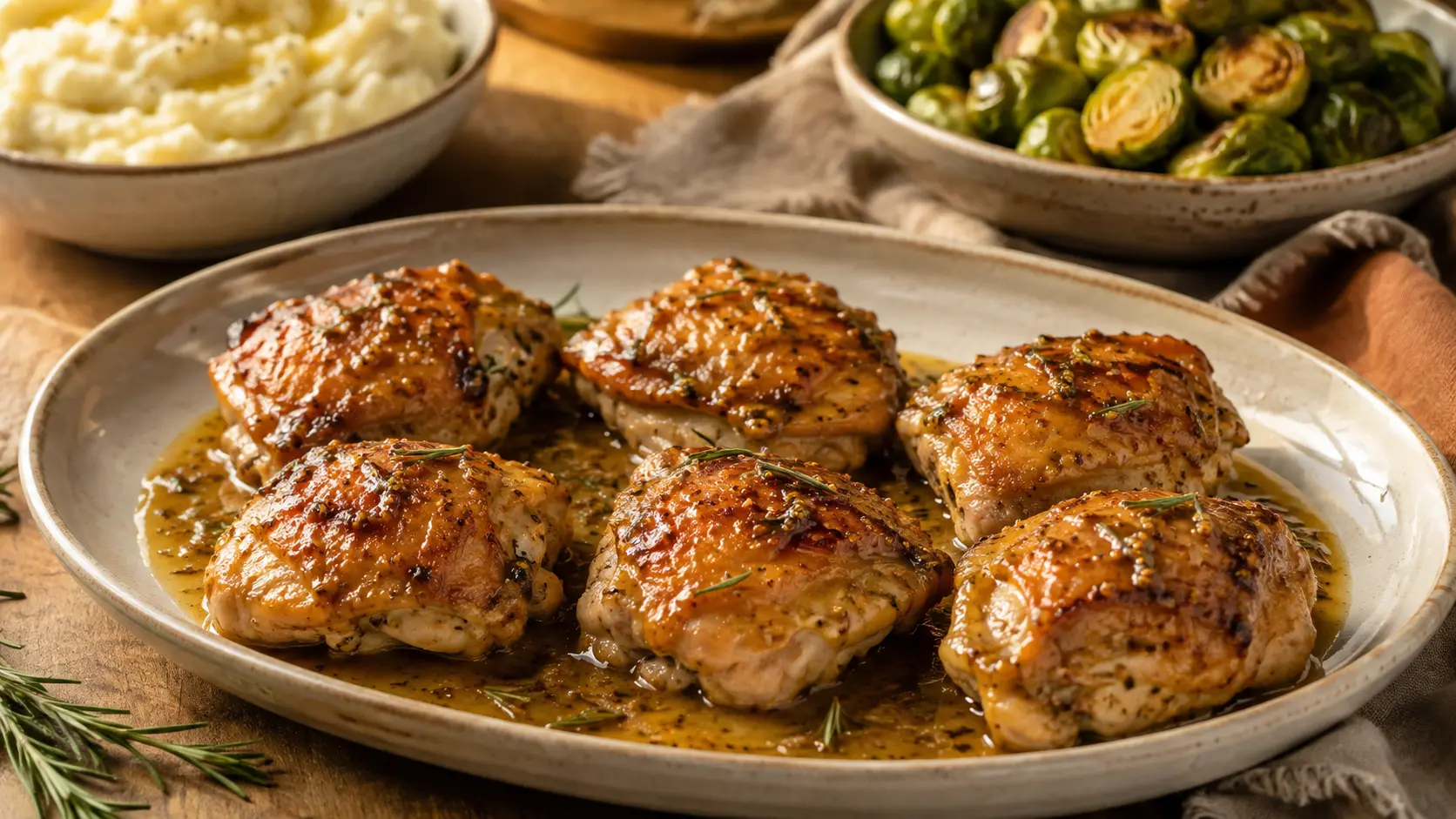
Golden edges and bubbling maple-Dijon pan juices make a plain tray of chicken feel just right for a cool evening. These Maple-Dijon Chicken Thighs for an Easy Fall Dinner combine tender boneless thighs with tangy mustard, pure maple syrup, garlic, rosemary, and a savory touch of soy sauce.
Preparation takes about 10 minutes, and everything cooks in one casserole dish after the sauce is mixed. A brief finish under the broiler gives the chicken welcome color without requiring a skillet or extra searing step.
Why You’ll Love This Recipe
- Requires only about 10 minutes of hands-on preparation.
- Uses one mixing bowl and one 9×13-inch casserole dish.
- Produces six juicy chicken thighs with sweet and tangy pan juices.
- Needs no stovetop searing or advance marinating.
- Fits naturally into a fall dinner with potatoes, rice, squash, or roasted vegetables.
Ingredients
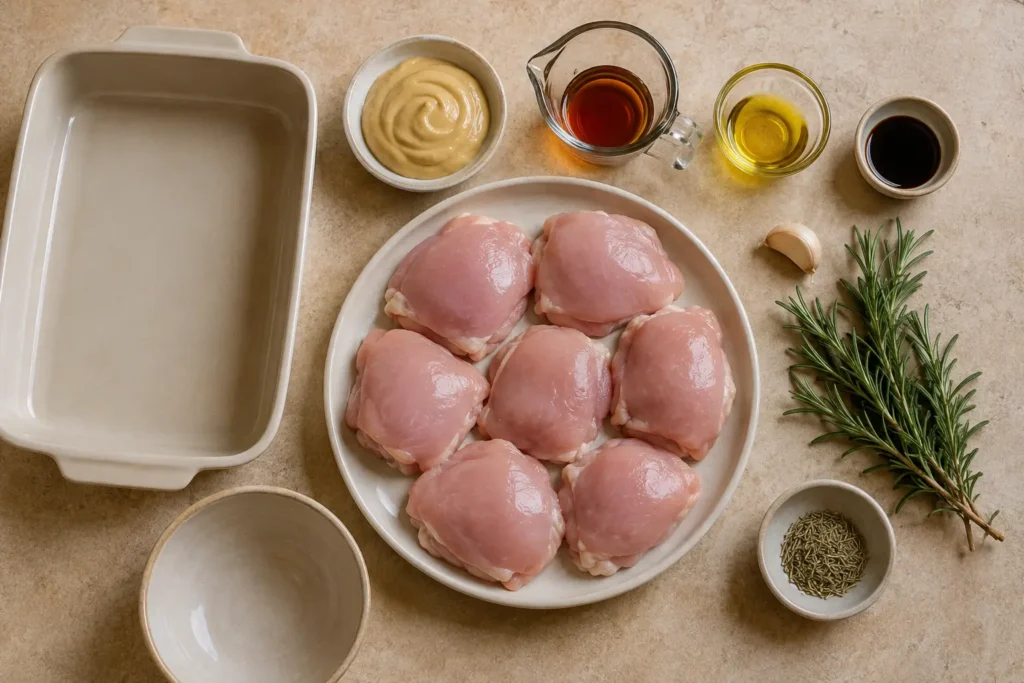
- ¼ cup Dijon mustard (60 mL)
- 2 Tbsp 100% pure maple syrup (30 mL)
- 1 Tbsp olive oil (15 mL)
- 2 tsp soy sauce (10 mL)
- 1 garlic clove, minced
- ½ Tbsp dried or fresh rosemary, chopped (1½ tsp or 7.5 mL)
- 6 boneless, skinless chicken thighs, about 2.3 pounds total (1.04 kg)
- Nonstick cooking spray for the baking dish
Use pure maple syrup rather than maple-flavored pancake syrup. Pancake syrup has a different composition and sweetness, so it won’t produce the same balanced maple-Dijon sauce.
Use either fresh or dried rosemary as listed. If using fresh rosemary, chop it finely before stirring it into the sauce so the flavor spreads evenly over the chicken.
Step 1: Prepare the Oven and Baking Dish
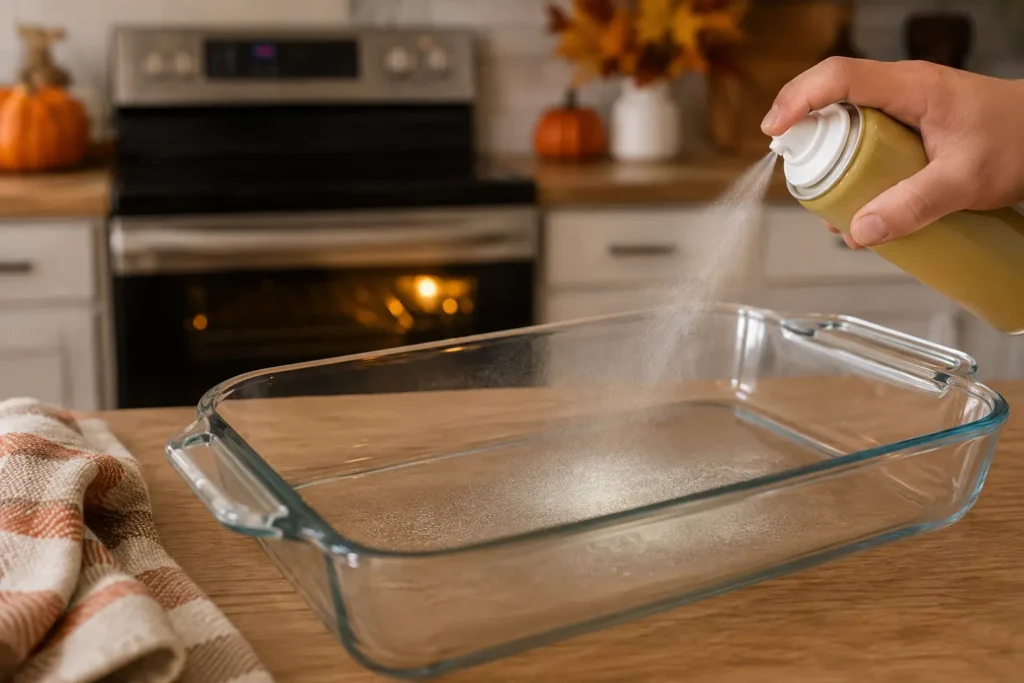
Preheat the oven to 375°F. Lightly coat a 9×13-inch glass or ceramic casserole dish with nonstick cooking spray. The wider dish gives the six boneless chicken thighs enough room to sit in a single layer without overlapping.
Pro Tip: Arrange an oven rack so you can safely use the broiler at the end. Check your oven’s instructions if you’re unsure about the correct broiler rack position.
Step 2: Mix the Maple-Dijon Sauce
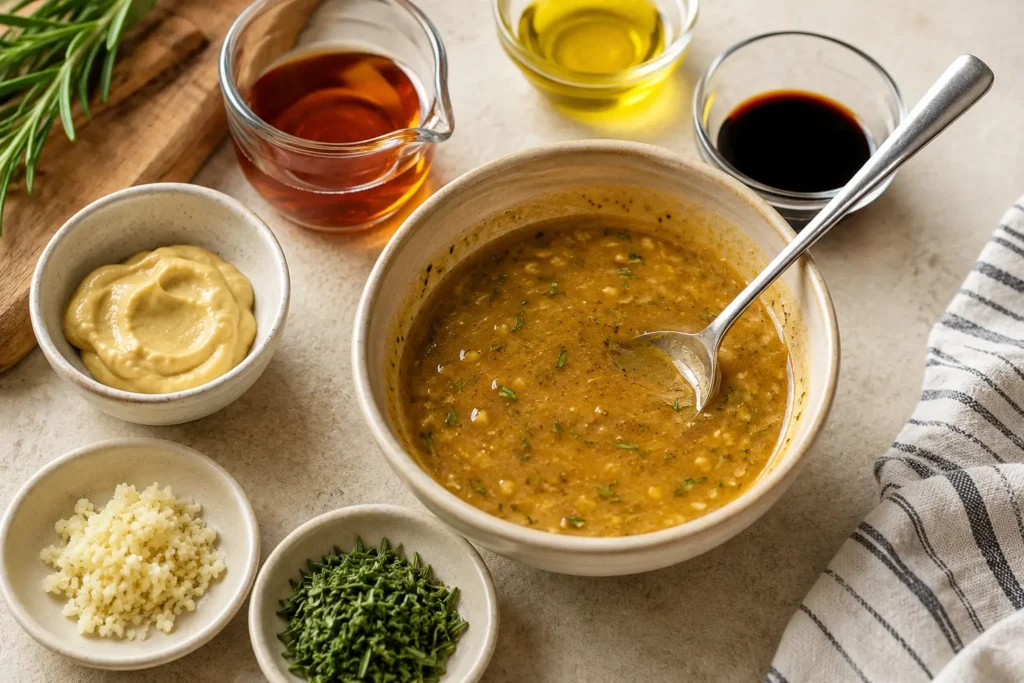
Stir the Dijon mustard, pure maple syrup, olive oil, and soy sauce together in a small bowl. Mince the garlic, chop the rosemary, and mix both into the sauce. Stir until the mustard is evenly loosened and no separate streaks of oil remain.
This mixture should look smooth and spoonable. It’s a cooking sauce rather than a guaranteed thick glaze, since the chicken will release additional liquid in the oven.
Step 3: Coat the Chicken
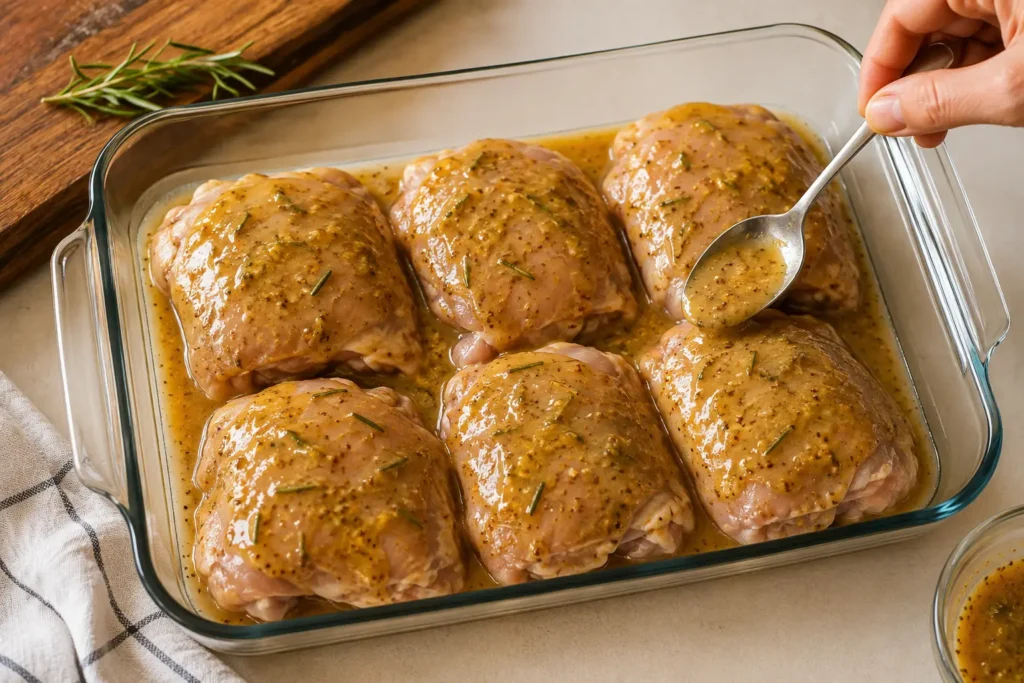
Place the boneless, skinless chicken thighs in the prepared casserole dish. Keep them close together but don’t overlap them. Pour the maple-Dijon mixture over the chicken, then use a spoon to spread it across the exposed surfaces until every thigh is coated.
Pro Tip: A spoon works better than a brush later in the recipe. Brushing can pull away the mustard coating that has started to set on the chicken.
Step 4: Bake Until Safely Cooked
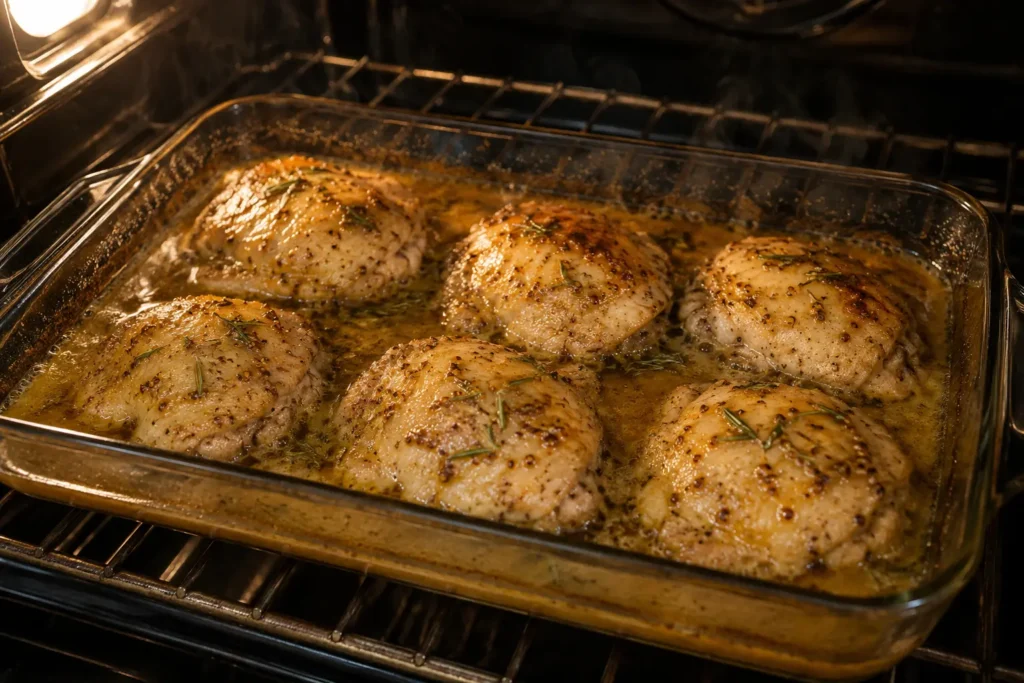
Bake the chicken at 375°F for 45–50 minutes. If your thighs are unusually small, begin checking their temperature at about 35 minutes. They aren’t ready to remove until an instant-read thermometer registers at least 165°F in the thickest part.
The liquid surrounding the thighs should be actively simmering. Don’t judge safety by color or clear juices alone; USDA guidance identifies a thermometer as the reliable way to confirm doneness.
Step 5: Baste, Broil, and Serve
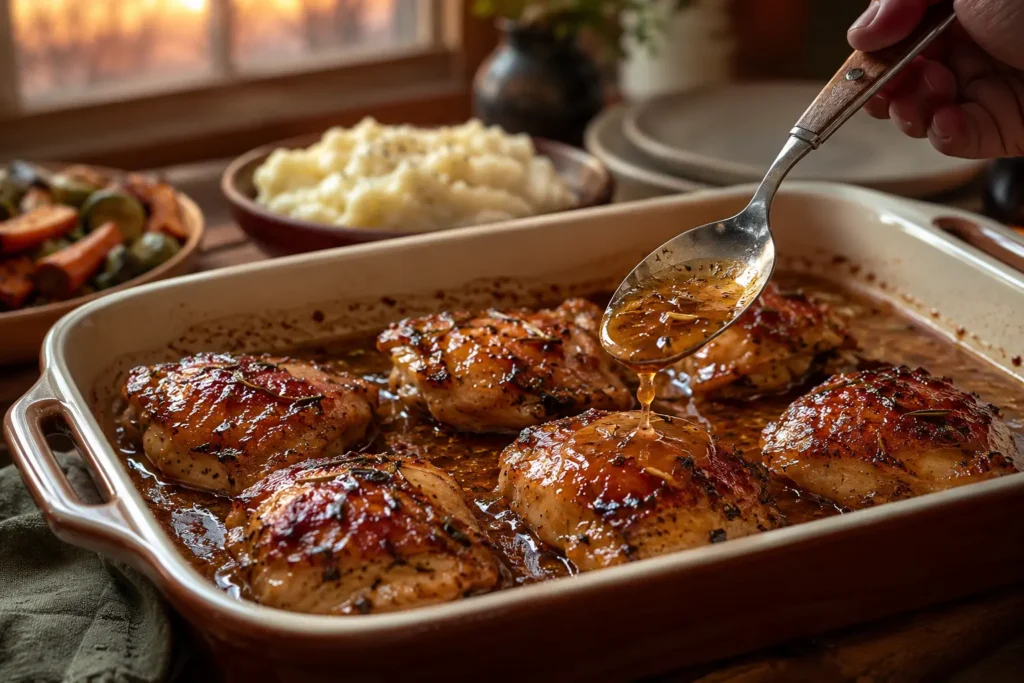
Spoon some of the hot pan juices over each thigh, then switch the oven from baking to broiling. Broil for about 5 minutes, watching continuously, until the tops are golden brown with a few deeper caramelized areas. Confirm that the thickest part reaches 165°F, then serve hot with the pan juices spooned over the chicken.
The sauce may remain relatively loose because boneless thighs release moisture as they bake. That isn’t a failure—it makes a flavorful liquid for spooning over rice, potatoes, or vegetables.
Expert Tips for Better Results
- Thaw frozen chicken thighs completely in the refrigerator before cooking; the approved temperature and timing are for thawed chicken.
- Choose thighs of a similar size so they reach 165°F at roughly the same time.
- Keep the chicken in one layer. Overlapping pieces cook less evenly and block browning.
- Insert the thermometer into the thickest section of each thigh for an accurate reading.
- Expect pan juices rather than a heavy glaze. Released chicken moisture can make the sauce thinner.
- Monitor the full broiling period. Maple syrup encourages fast browning once exposed to direct heat.
Serving Suggestions
- Spoon the maple-Dijon pan juices over mashed potatoes for a cozy fall plate.
- Serve the chicken with steamed rice, which absorbs the sweet and savory sauce.
- Pair it with roasted Brussels sprouts for a pleasantly earthy contrast to the maple.
- Add roasted squash or sweet potatoes to carry the autumn flavors through the meal.
- Choose a crisp green salad when you want something fresh beside the warm, tender chicken.
Storage and Reheating
Refrigerate leftover Maple-Dijon Chicken Thighs for an Easy Fall Dinner within two hours of cooking. Transfer the chicken and its pan juices to a shallow airtight container and keep refrigerated at 40°F or below for 3–4 days.
For longer storage, freeze the cooked chicken with its sauce in airtight freezer containers for up to four months for best quality. Freezing is supported by USDA guidance for cooked chicken pieces, although the primary recipe’s author did not personally verify the texture of this particular dish after thawing.
Thaw frozen leftovers overnight in the refrigerator. Reheat them in the oven or microwave with some of the reserved pan juices, covering the chicken during most of reheating to limit moisture loss. The exact time depends on portion size and starting temperature, so use a thermometer and heat the thickest portion to 165°F.
Microwave reheating may soften the browned coating. The chicken will still retain the maple-Dijon flavor, but it won’t have quite the same broiled surface as a freshly cooked portion.
Ingredients
Method
- Preheat the oven to 375°F. Coat a 9×13-inch glass or ceramic casserole dish with nonstick cooking spray.
- Stir together the Dijon mustard, maple syrup, olive oil, and soy sauce in a small bowl. Add the minced garlic and chopped rosemary.
- Arrange the chicken thighs in the prepared dish in one layer, keeping them close but not overlapping.
- Pour the sauce over the chicken and spread it with a spoon until every thigh is coated.
- Bake for 45–50 minutes. For unusually small thighs, begin checking at about 35 minutes. Cook until an instant-read thermometer registers at least 165°F in the thickest part and the surrounding liquid is simmering.
- Spoon the pan juices over the chicken. Switch the oven to broil and broil for about 5 minutes, watching continuously, until the tops are golden brown.
- Confirm a minimum internal temperature of 165°F and serve hot with the pan juices.