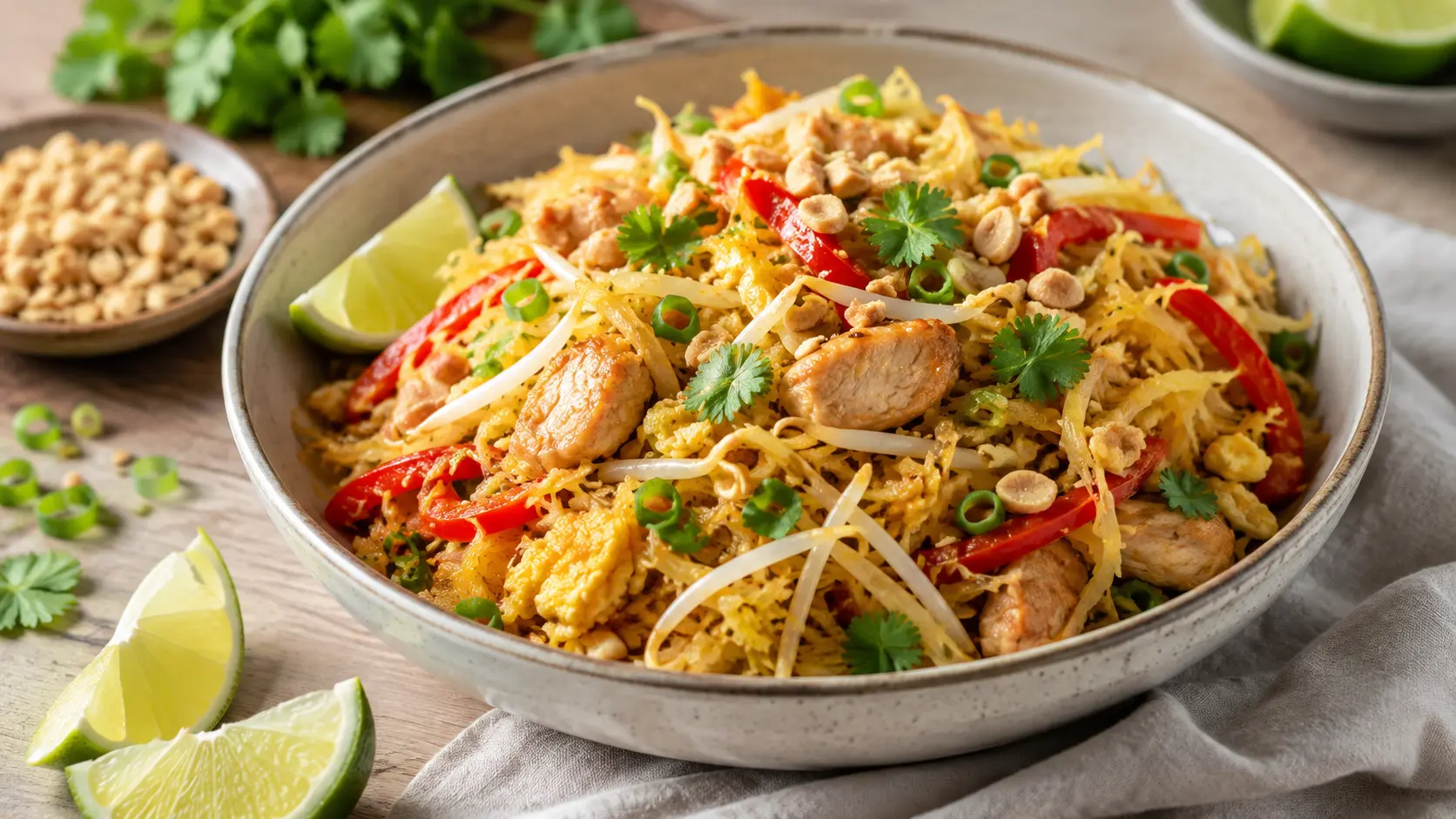
There’s something about the smell of garlic, tamarind, and lime hitting a hot skillet that makes dinner instantly more exciting. Add tender chicken, crisp vegetables, crunchy peanuts, and strands of roasted squash, and you’ve got a meal that feels fresh without feeling like “diet food.”
This Low-Carb Spaghetti-Squash Pad Thai swaps traditional rice noodles for tender spaghetti squash noodles, then coats everything in a tangy, savory Pad Thai sauce. It’s colorful, filling, and surprisingly easy to pull together.
The trick I rely on is slightly under-roasting the squash and blotting the strands before stir-frying. That simple step keeps them pleasantly firm instead of watery or mushy.
Why You’ll Love This Recipe
- Low-carb: Spaghetti squash keeps it lighter than traditional rice noodles.
- Protein-packed: Chicken and eggs make it filling enough for dinner.
- Bold flavor: Tamarind, fish sauce, lime, garlic, and peanuts bring classic Pad Thai-style taste.
- Great texture: Crisp bean sprouts, bell pepper, and peanuts add plenty of crunch.
- Prep-friendly: Roast the squash and mix the sauce ahead for faster cooking later.
Ingredients
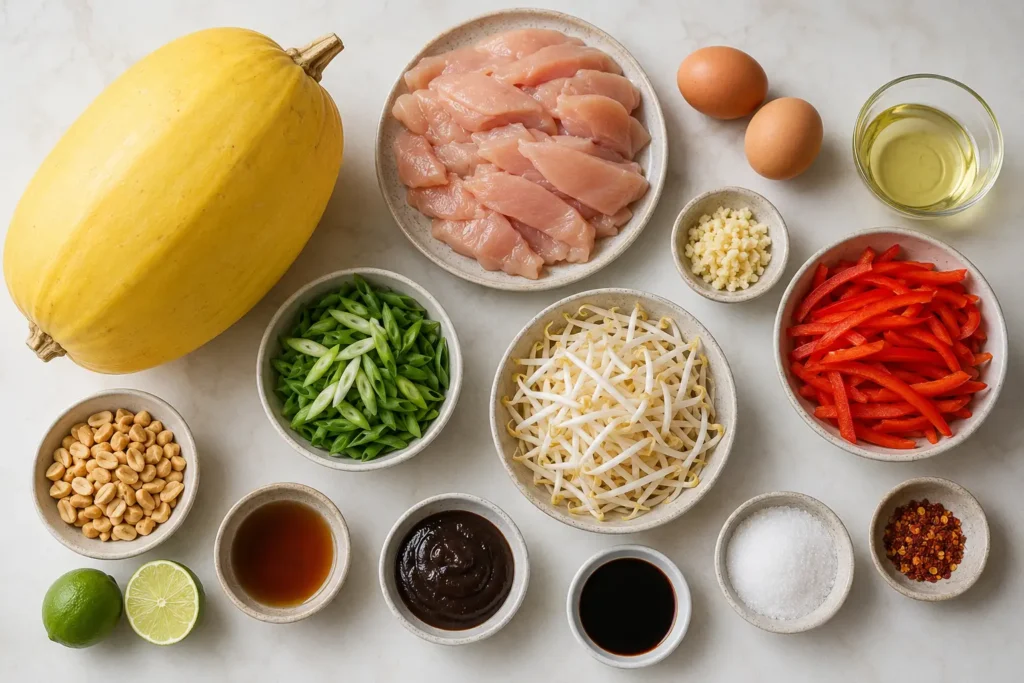
For the Pad Thai
- 1 medium spaghetti squash, about 3 lb (1,360 g)
- 12 oz boneless, skinless chicken breast (340 g), thinly sliced
- 2 large eggs (100 g without shells), lightly beaten
- 2 Tbsp avocado oil (28 g), divided
- 3 garlic cloves (9 g), minced
- 1 cup thinly sliced red bell pepper (120 g)
- 2 cups fresh bean sprouts (200 g)
- 4 green onions (60 g), sliced, whites and greens separated
- 1/4 cup roasted unsalted peanuts (35 g), roughly chopped
- 1 lime (70 g), cut into wedges
For the Pad Thai Sauce
- 2 Tbsp fish sauce (30 g)
- 1 1/2 Tbsp tamarind paste (24 g)
- 1 Tbsp low-sodium tamari or soy sauce (15 g)
- 2 Tbsp fresh lime juice (30 g)
- 1 1/2 Tbsp granulated allulose or monk-fruit sweetener (18 g)
- 1/4 tsp red pepper flakes (0.5 g)
Spaghetti squash: Pick one that feels firm and heavy for its size. Don’t worry about finding the biggest squash in the bin; a medium 3-pound squash is plenty for four servings.
Tamarind paste: Tamarind gives the sauce its distinct sweet-sour depth. Different brands vary in strength, so taste your sauce before deciding it needs more.
Fish sauce: This adds the salty, savory flavor associated with Pad Thai. A little goes a long way, so measure rather than pouring straight from the bottle—I learned that one the salty way.
How to Make This Recipe
Step 1: Roast the Spaghetti Squash
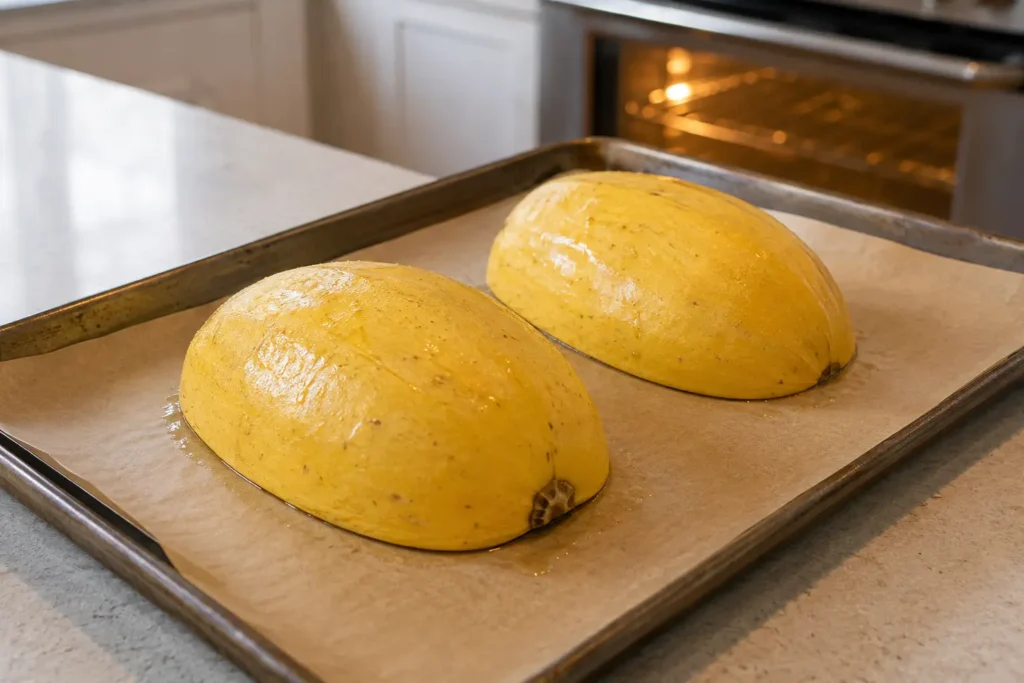
Preheat the oven to 400°F. Cut the squash lengthwise and scoop out the seeds. Rub the cut sides with about 1 tsp oil, place cut-side down on a parchment-lined baking sheet, and roast for 35–40 minutes. The skin should pierce easily with a fork, but the flesh shouldn’t collapse.
Pro Tip: Start checking around 35 minutes. Slightly firm squash gives you much better spaghetti squash noodles once they’re tossed in the skillet.
Step 2: Mix the Sauce and Prep the Ingredients
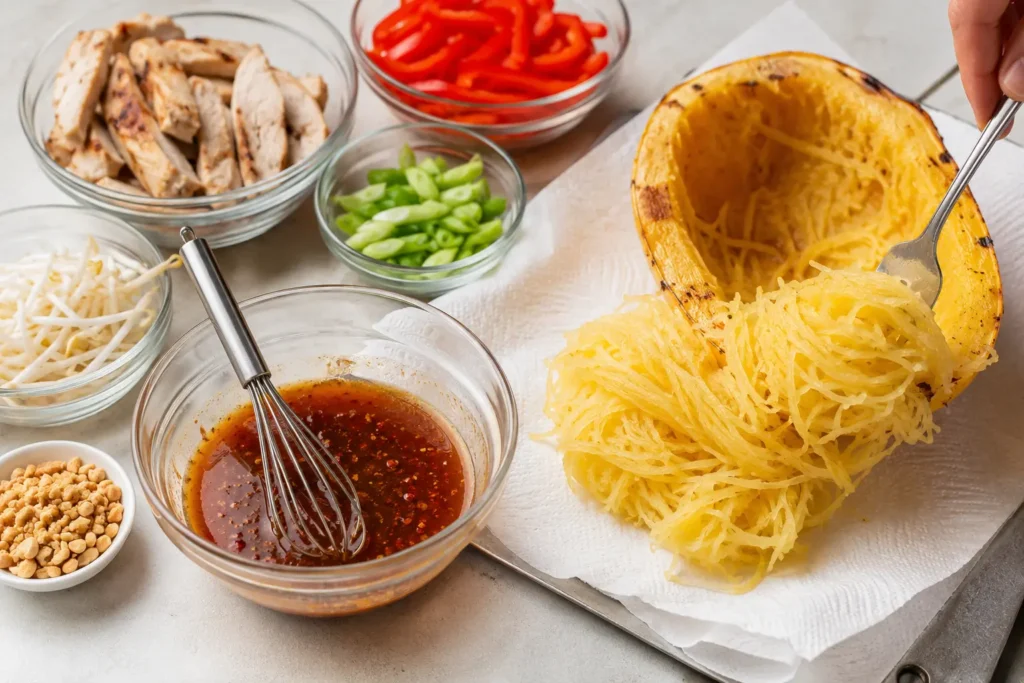
Whisk the fish sauce, tamarind paste, tamari, lime juice, sweetener, and red pepper flakes in a small bowl. Meanwhile, slice the chicken and vegetables, beat the eggs, and chop the peanuts. Scrape the cooked squash into strands, then gently blot them with paper towels to remove excess moisture.
Pro Tip: Don’t skip the blotting step. Too much moisture dilutes the tamarind sauce and makes the finished dish watery.
Step 3: Cook the Chicken, Eggs, and Vegetables
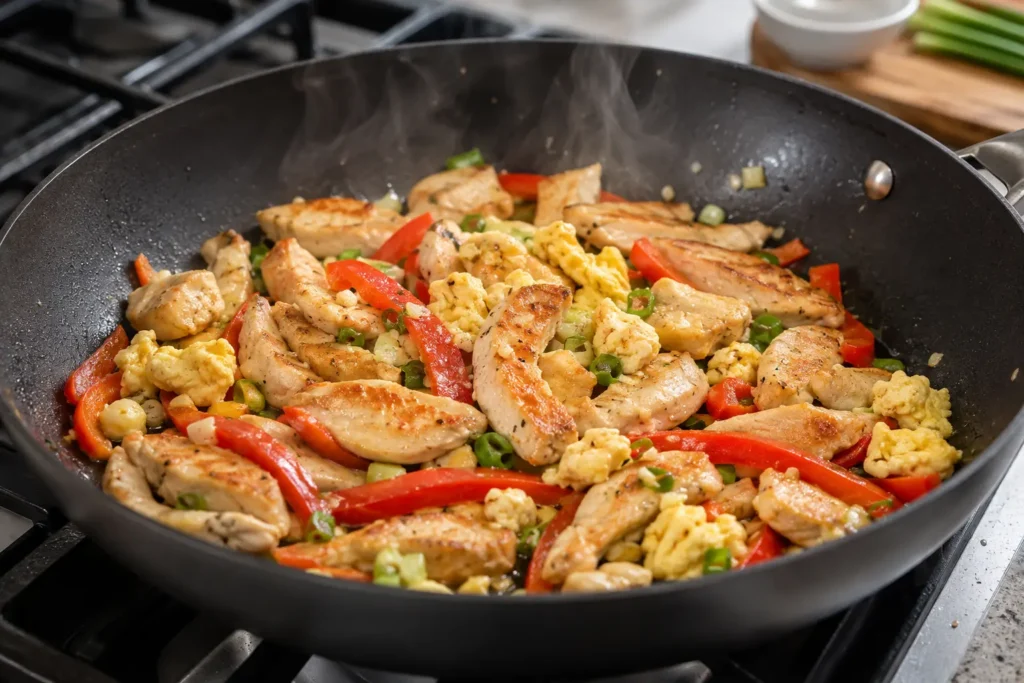
Heat 1 Tbsp oil in a large skillet over medium-high heat. Add the chicken in a single layer and cook for 4–5 minutes, stirring occasionally, until lightly browned and 165°F inside. Transfer it to a plate. Add the remaining oil, scramble the eggs for about 45 seconds, then stir in garlic, green onion whites, and bell pepper for 2 minutes.
Common mistake to avoid: Don’t crowd a small skillet. Crowding traps steam, so your chicken cooks pale and wet instead of developing lightly browned edges.
Step 4: Toss, Finish, and Serve
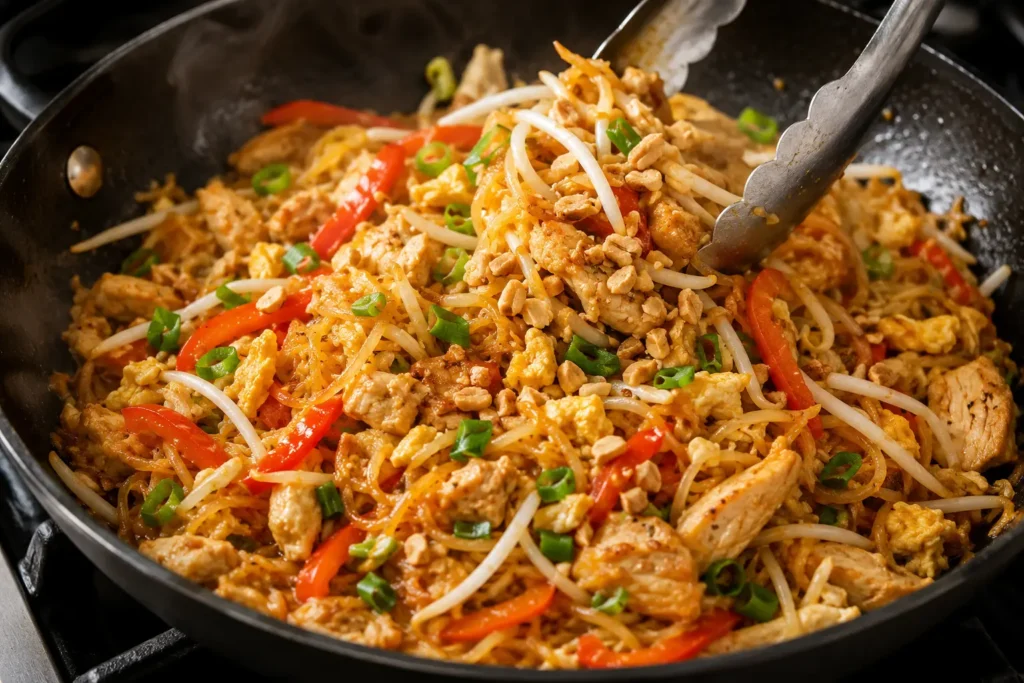
Return the chicken to the skillet and add the squash strands and sauce. Toss gently over medium-high heat for 2–3 minutes until everything looks glossy and the excess moisture has cooked away. Fold in the bean sprouts and half the peanuts for the final 30–60 seconds, then remove from heat.
Pro Tip: Lift and turn the squash with tongs rather than aggressively stirring it. The strands are more delicate than rice noodles and can break when overworked.
Finish with green onion tops, remaining crushed peanuts, and fresh lime wedges.
Expert Tips for Perfect Results
- Keep the squash slightly firm. Overcooked squash may taste fine on its own but tends to turn soft once it meets the hot skillet. Other spaghetti squash Pad Thai recipes also emphasize stopping before the strands become mushy.
- Dry the strands before adding sauce. A quick blot removes surface moisture and helps the Pad Thai sauce cling instead of collecting at the bottom of the pan.
- Use a wide skillet. More surface area lets moisture evaporate quickly, which is especially helpful when cooking vegetable noodles.
- Taste the sauce before using it. It should taste fairly bold on its own. The mild squash will soften the salty, sour, and spicy notes once everything is combined.
- Add sprouts at the end. They need only a brief toss in the heat. I usually stop cooking while they still have a noticeable snap.
- Finish with fresh lime. A squeeze right before eating brightens the peanuts, chicken, and fish sauce without adding more salt.
Variations
- Make it vegetarian by replacing the chicken with 8 oz (227 g) extra-firm tofu and using vegetarian fish sauce or additional tamari. Tofu is a practical protein option for spaghetti squash Pad Thai.
- Keep it gluten-free by using certified gluten-free tamari instead of regular soy sauce and checking the labels on your tamarind and fish sauce.
- Make it spicier with 1/2 tsp red pepper flakes or a small amount of sliced Thai chile. Add the heat gradually so it doesn’t overpower the tamarind sauce.
- Swap chicken for 12 oz (340 g) peeled shrimp. Cook the shrimp about 1–2 minutes per side, just until opaque, then remove them before cooking the eggs.
- Add 1 cup (90 g) thinly shredded cabbage with the bell pepper for more vegetable crunch and volume.
Serving Suggestions
- Top each bowl with crushed peanuts, green onions, cilantro, and fresh lime for crunch, freshness, and acidity.
- Serve sliced cucumber or a simple cucumber salad alongside it; the cool, crisp texture works nicely with the salty Pad Thai sauce.
- Put chili-garlic sauce or extra red pepper flakes on the table so everyone can control their own heat level.
- Pair the meal with unsweetened iced green tea or sparkling lime water for a fresh drink that won’t compete with the tangy sauce.
- Add steamed edamame or crisp lettuce cups on the side if you’re serving a larger dinner.
Storage & Reheating Low-Carb Spaghetti-Squash Pad Thai
Store leftovers in an airtight container in the refrigerator for up to 3–4 days. Keep extra peanuts and fresh garnishes separate so they don’t soften.
For the best texture, freeze portions only when necessary. The cooked dish can be frozen for up to 1 month, but spaghetti squash will be softer after thawing.
Reheat refrigerated portions in a skillet over medium heat for 5–7 minutes. Toss occasionally until hot throughout and any released moisture has evaporated.
The microwave also works for individual portions. Heat for 60–90 seconds, stir, then continue in 30-second intervals as needed. Finish reheated servings with fresh lime and peanuts.
Ingredients
Method
- Preheat oven to 400°F. Halve and seed the spaghetti squash, lightly oil the cut surfaces, and roast cut-side down for 35–40 minutes. Scrape into strands and blot away excess moisture.
- Whisk fish sauce, tamarind paste, tamari, lime juice, sweetener, and red pepper flakes together.
- Heat oil in a large skillet over medium-high heat. Cook chicken for 4–5 minutes, until it reaches 165°F; remove. Scramble eggs, then cook garlic, green onion whites, and bell pepper for 2 minutes.
- Return chicken to the skillet. Add squash and sauce and toss for 2–3 minutes. Fold in bean sprouts and half the peanuts for 30–60 seconds. Serve with remaining peanuts, green onions, and lime.