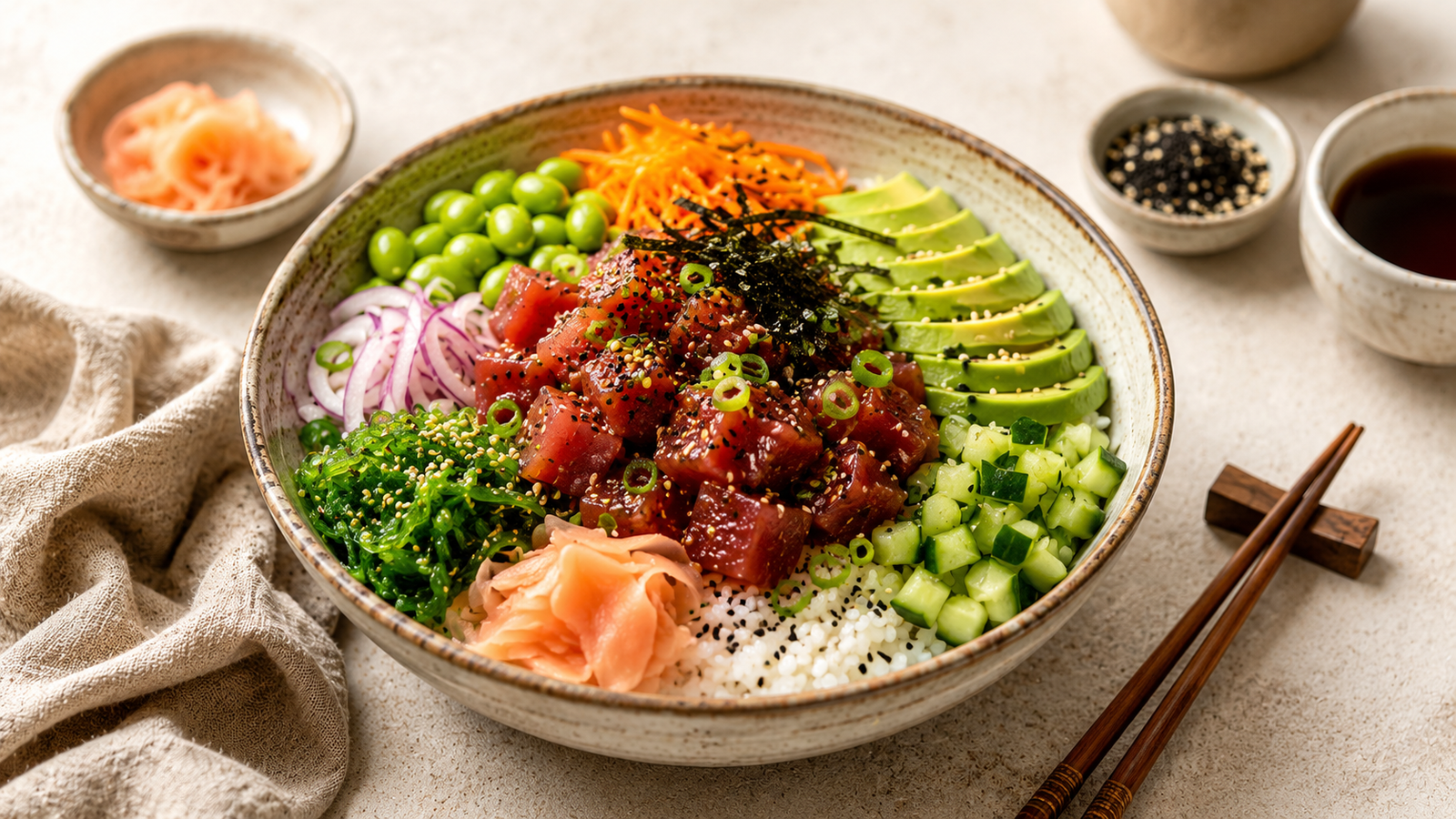
A bowl of fresh poke always reminds me that simple ingredients can create something truly special. The first time I made it at home, I expected it to be complicated, but once the chilled tuna met warm seasoned rice and crisp vegetables, I wondered why I’d waited so long. Every bite was fresh, light, and packed with clean flavors.
This Hawaiian Poke Bowl Homemade Easy recipe brings the flavors of a classic Hawaiian-inspired poke bowl into your kitchen without spending restaurant prices. It uses sushi-grade ahi tuna, fluffy seasoned rice, crisp vegetables, and a light homemade poke sauce that complements the fish instead of covering it up. One simple trick—marinating the tuna for just 10 to 15 minutes—keeps every bite fresh, tender, and perfectly seasoned.
Why You’ll Love This Recipe
- Ready in about 30 minutes, making it perfect for busy weeknights or quick lunches.
- Uses simple pantry ingredients plus fresh sushi-grade tuna for restaurant-quality flavor at home.
- Great for meal prep because the rice, vegetables, and sauce can all be prepared ahead.
- Naturally packed with lean protein, healthy fats, and fresh vegetables for a balanced meal.
- Easy to customize with your favorite vegetables, grains, or cooked seafood while still keeping the bowl fresh and colorful.
Ingredients
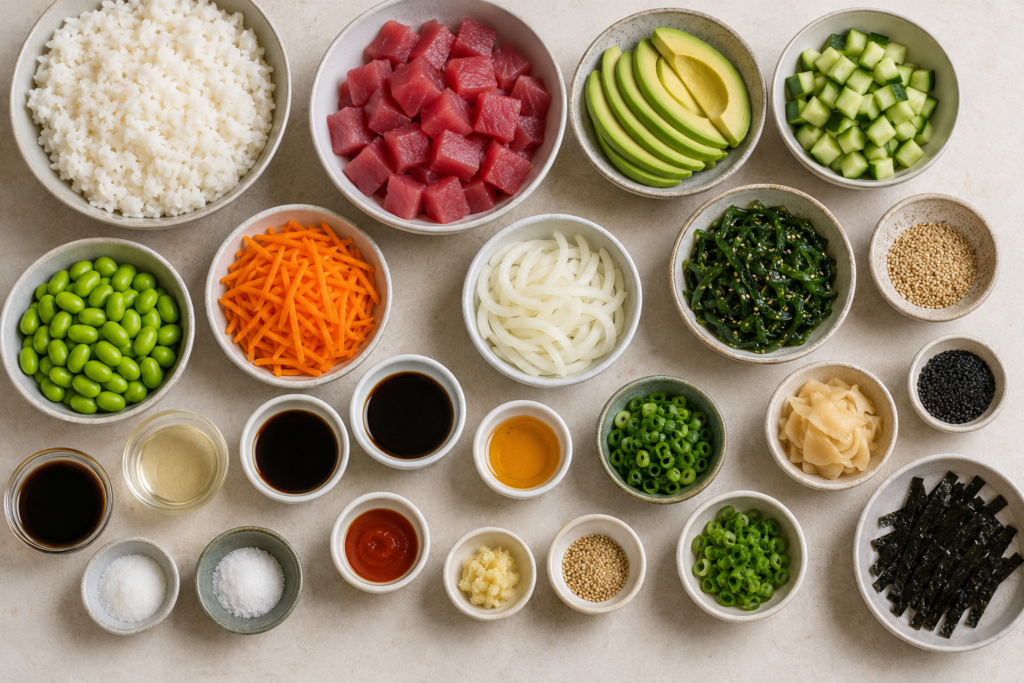
For the Seasoned Sushi Rice
- 2 cups cooked short-grain sushi rice (320 g)
Short-grain rice has the slightly sticky texture that traditional poke bowls are known for. - 2 tbsp rice vinegar (30 ml)
- 1 tsp sugar (4 g)
- ½ tsp kosher salt (3 g)
For the Poke
- 12 oz sushi-grade ahi tuna, cut into ¾-inch cubes (340 g)
Always buy sushi-grade tuna from a trusted seafood market. If you can’t find it, cooked salmon makes a great substitute. - 2 tbsp low-sodium soy sauce (30 ml)
- 1 tsp toasted sesame oil (5 ml)
- 1 tsp freshly grated ginger (5 g)
- 2 green onions, thinly sliced (20 g)
- 1 tsp sesame seeds (3 g)
Homemade Poke Sauce
- 2 tbsp low-sodium soy sauce (30 ml)
- 1 tbsp rice vinegar (15 ml)
- 2 tsp toasted sesame oil (10 ml)
- 1 tsp grated fresh ginger (5 g)
- 1 tsp finely sliced green onions (5 g)
- ½ tsp sriracha (optional) (2 ml)
Adds gentle heat without overpowering the fresh tuna.
Bowl Toppings
- 1 large avocado, sliced (150 g)
Choose one that yields slightly when gently pressed. - 1 cup cucumber, diced (120 g)
- 1 cup shelled edamame, cooked and cooled (150 g)
- ½ cup shredded carrots (60 g)
- ¼ cup thinly sliced sweet onion or Maui onion (35 g)
Sweet onion gives a mild crunch that pairs beautifully with raw tuna. - ¼ cup wakame seaweed salad (40 g), optional
- 1 sheet roasted nori, cut into thin strips (3 g)
- 1 tsp black sesame seeds (3 g)
- Pickled ginger, for serving
How to Make Hawaiian Poke Bowl
Step 1. Season the Sushi Rice
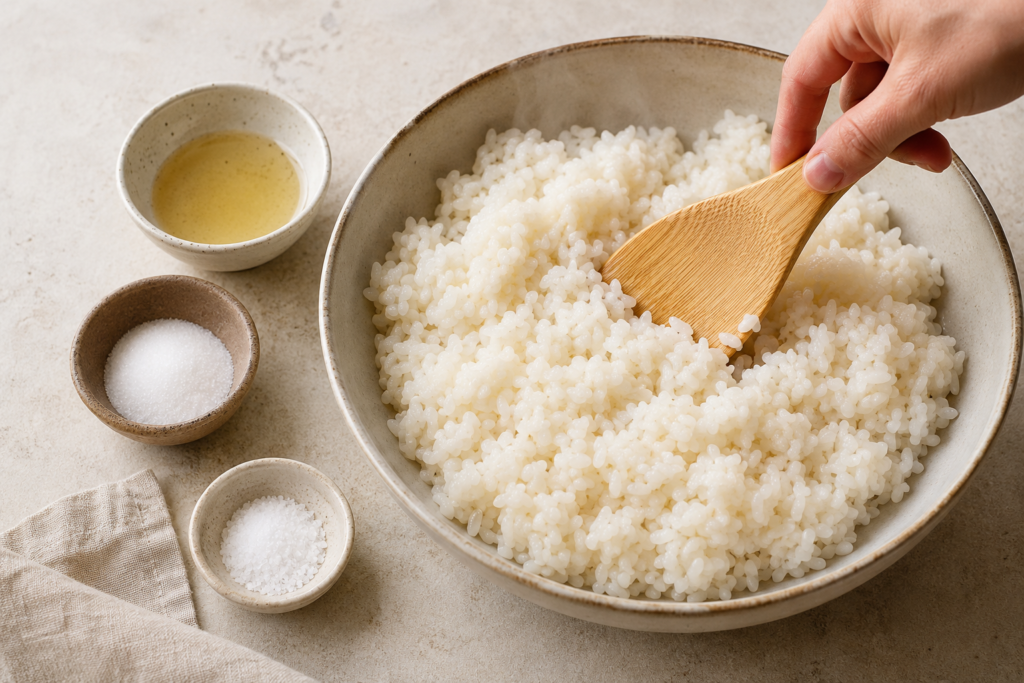
Cook the sushi rice according to the package directions. While it’s still warm, gently fold together the rice vinegar, sugar, and salt until evenly combined. Spread the rice onto a baking sheet or wide bowl to cool slightly. It should be just warm, not steaming hot, before adding the tuna.
Pro Tip: Warm rice absorbs seasoning better than cold rice, but hot rice can partially cook raw tuna and change its texture.
Step 2. Marinate the Tuna
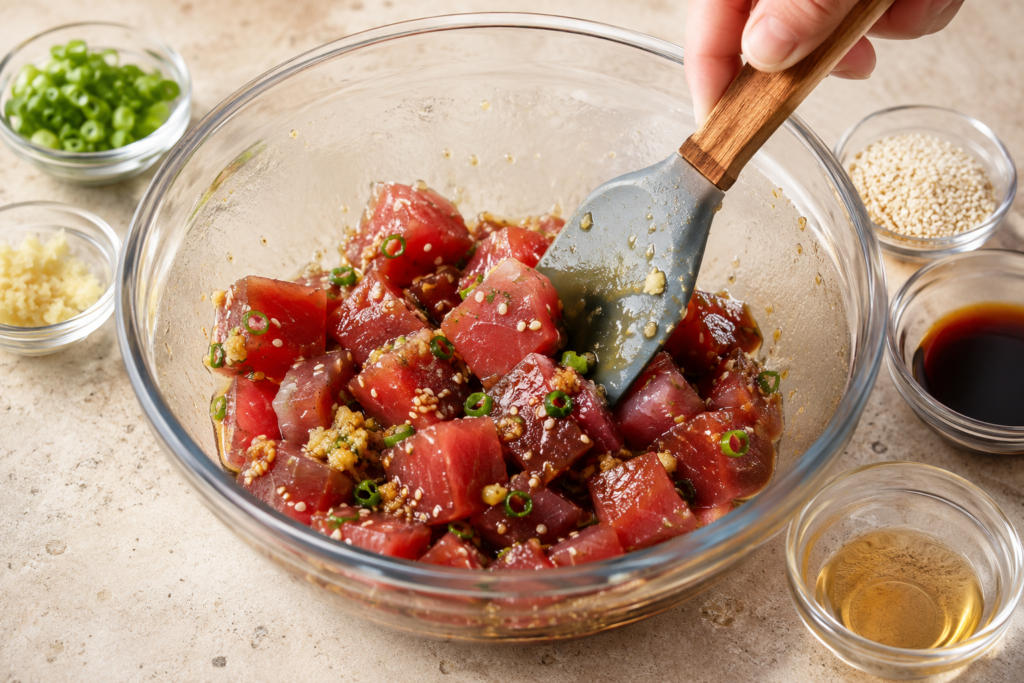
Place the cubed sushi-grade tuna into a chilled mixing bowl. Add the soy sauce, toasted sesame oil, grated ginger, sliced green onions, and sesame seeds. Fold everything together gently with a rubber spatula until every piece is lightly coated.
Refrigerate for 10 to 15 minutes while preparing the remaining ingredients.
Avoid this mistake: Don’t marinate the tuna for longer than 20 minutes. Too much time in soy sauce changes its delicate texture and makes the fish overly salty.
Step 3. Prepare the Homemade Poke Sauce
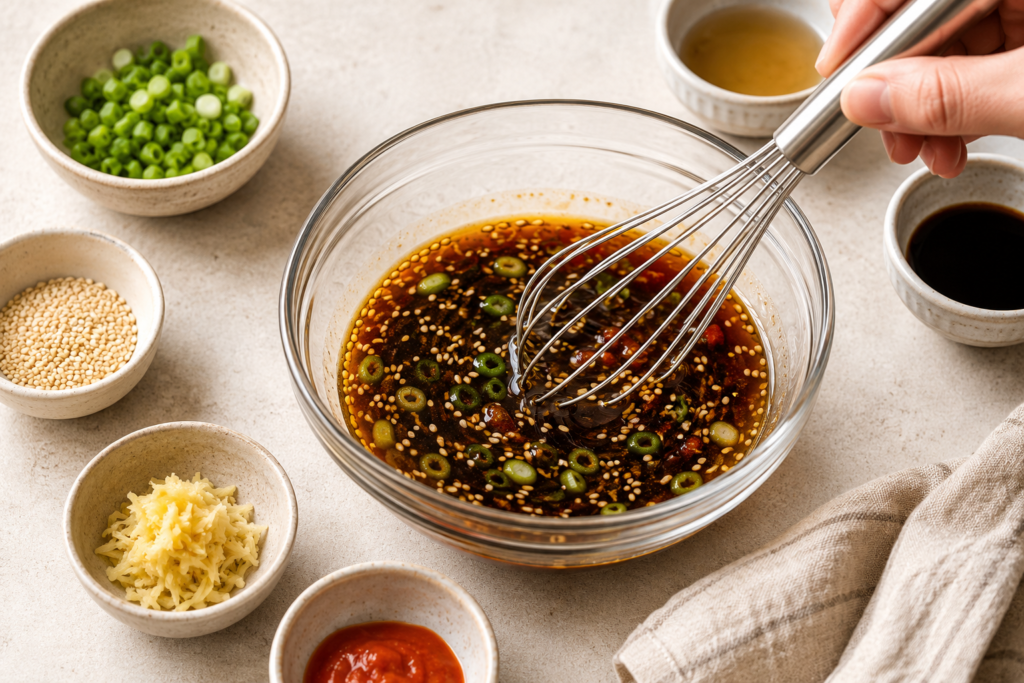
Whisk together the soy sauce, rice vinegar, sesame oil, ginger, green onions, and optional sriracha until smooth.
Taste before adding more soy sauce. The dressing should be light and balanced because the tuna is already seasoned.
I learned this the hard way after making my first batch far too salty. A lighter sauce lets the fresh fish shine.
Step 4. Prepare the Fresh Toppings
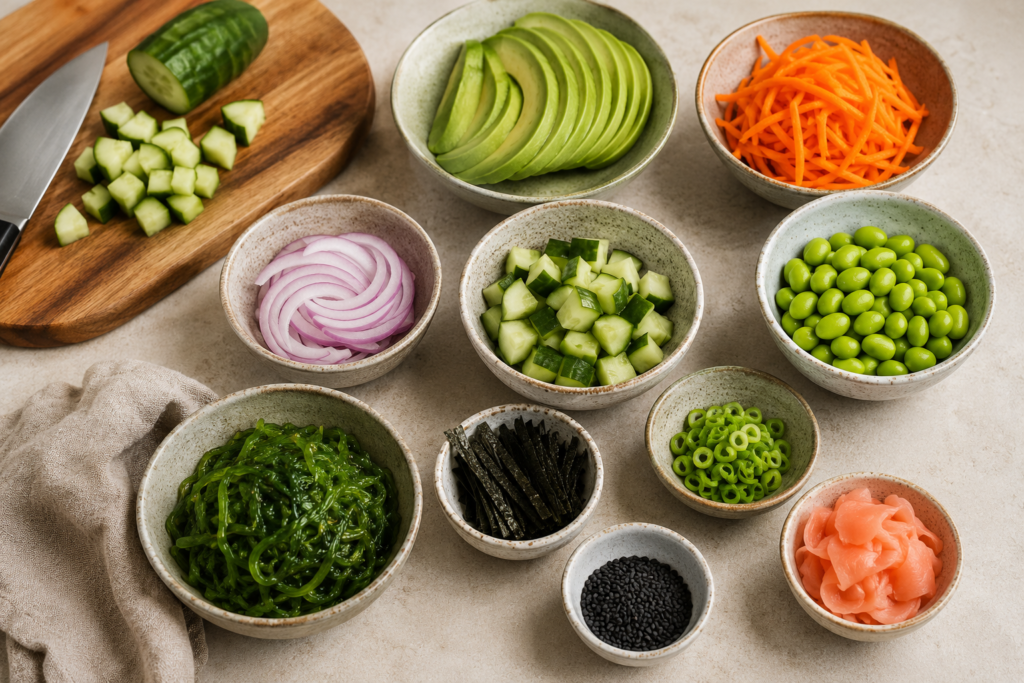
Meanwhile, slice the avocado, dice the cucumber, shred the carrots, and cook the edamame if needed. Pat the cucumber dry with paper towels so extra moisture doesn’t water down the bowl.
Arrange every topping separately on a large plate. Assembly becomes much faster, and each ingredient stays crisp.
Pro Tip: Cut the avocado just before serving to keep it bright green without needing lemon juice.
Step 5. Build the Bowls
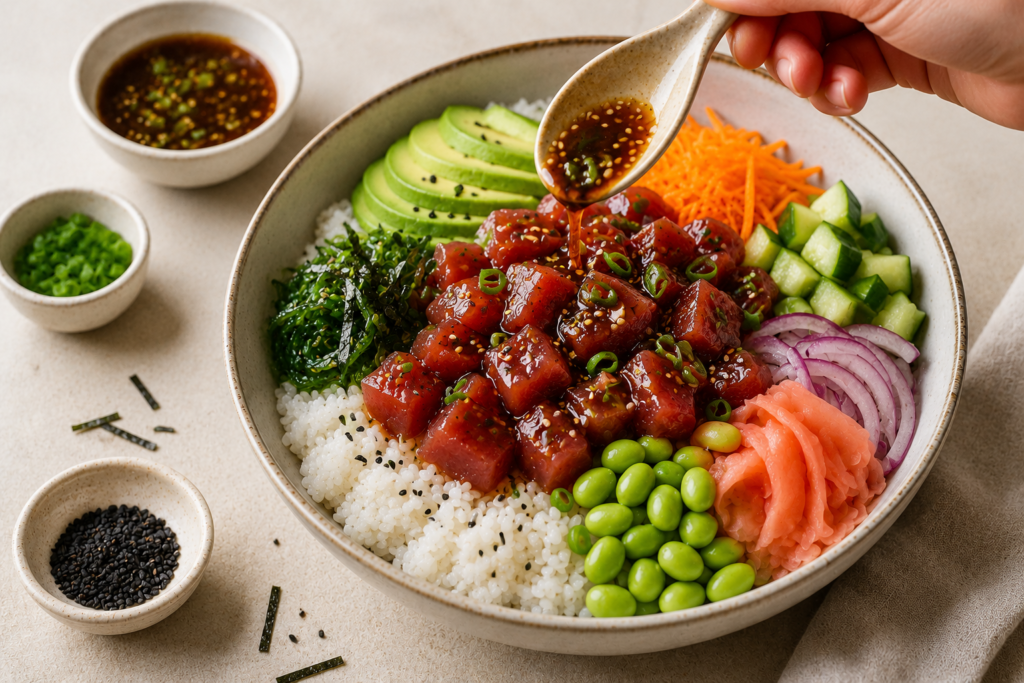
Divide the seasoned rice evenly among four serving bowls.
Arrange the marinated tuna, avocado, cucumber, carrots, edamame, sweet onion, and wakame in separate sections over the rice. Keeping the ingredients separated makes the bowl look fresh and lets everyone enjoy different flavors in every bite.
Step 6. Finish and Serve
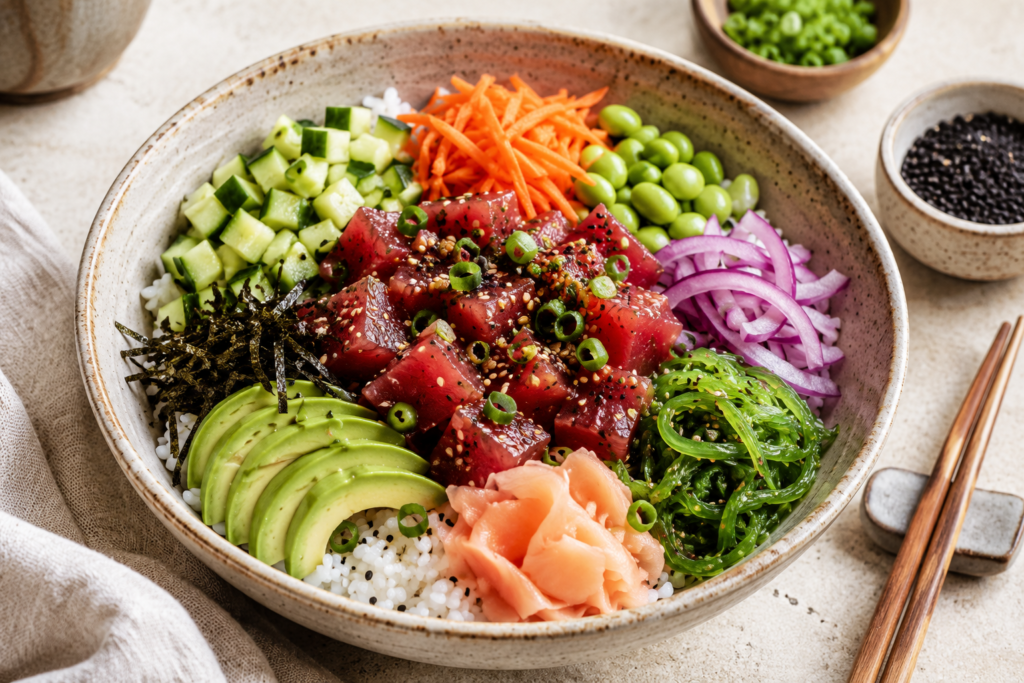
Drizzle a small amount of the homemade poke sauce over the bowls. Sprinkle with nori strips, black sesame seeds, and extra green onions before serving with pickled ginger on the side.
Serve immediately while the rice is slightly warm and the tuna is well chilled. That contrast is one of the little details that makes homemade poke taste like it came from your favorite poke shop.
Expert Tips for Perfect Results
- Use sushi-grade tuna from a trusted fish market. This is the most important step for both flavor and food safety. If the fish doesn’t look bright, firm, and fresh, choose something else.
- Keep the tuna cold until the very last minute. I like to place the mixing bowl in the refrigerator for a few minutes before adding the fish. It helps the tuna stay firm while you mix the marinade.
- Let the rice cool to slightly warm or room temperature before building the bowls. Hot rice can affect the texture of the tuna, while cold rice loses some of its soft, sticky texture.
- Slice the tuna into even ¾-inch cubes so every piece marinates evenly and looks great in the bowl.
- Don’t drown the bowl in sauce. Authentic poke bowl sauce lightly coats the fish instead of pooling at the bottom. You can always serve extra sauce on the side.
- Toast sesame seeds in a dry skillet for 2–3 minutes until fragrant. It only takes a minute or two, but the nutty flavor is worth the extra step.
Variations
- Swap the ahi tuna for sushi-grade salmon if you prefer a richer, buttery flavor.
- Make it gluten-free by replacing soy sauce with tamari or a certified gluten-free soy sauce.
- For a vegetarian version, replace the tuna with marinated extra-firm tofu, baked tofu cubes, or extra edamame.
- Turn up the heat by adding sliced jalapeños, extra sriracha, or a drizzle of spicy mayo over the finished bowl.
- For a lower-carb option, replace the sushi rice with cauliflower rice or a mix of shredded cabbage and greens.
Serving Suggestions
- Serve with a warm bowl of miso soup. The light broth pairs perfectly with the fresh, chilled poke bowl.
- Add extra avocado, sliced radishes, or mango for more color and texture without overpowering the tuna.
- Offer small bowls of spicy mayo, ponzu sauce, or extra soy sauce so everyone can customize their own bowl.
- Pair with iced green tea, sparkling lime water, or a light Japanese lager for a refreshing meal.
- Finish with crispy onions or toasted sesame seeds just before serving for an extra layer of crunch.
Storage & Reheating
Store leftover rice, vegetables, and sauce in separate airtight containers in the refrigerator for up to 4 days.
Fresh marinated tuna is best enjoyed within 24 hours. For the freshest flavor and best food safety, don’t keep raw fish longer than one day after preparing it.
Freeze cooked sushi rice for up to 2 months. Thaw overnight in the refrigerator before reheating. Raw marinated tuna and assembled poke bowls should not be frozen because the texture changes significantly.
To reheat the rice, sprinkle it with a teaspoon of water, cover loosely, and microwave for 45–60 seconds until just warm. Let it cool for a few minutes before adding the chilled tuna and toppings.
Ingredients
Method
- Cook and season the sushi rice with rice vinegar, sugar, and salt.
- Toss the tuna with soy sauce, sesame oil, ginger, green onions, and sesame seeds. Chill for 10–15 minutes.
- Whisk together the poke sauce ingredients.
- Prepare the vegetables and toppings.
- Divide the rice among serving bowls.
- Arrange the tuna and toppings over the rice.
- Drizzle with poke sauce and garnish with nori, sesame seeds, and pickled ginger. Serve immediately.