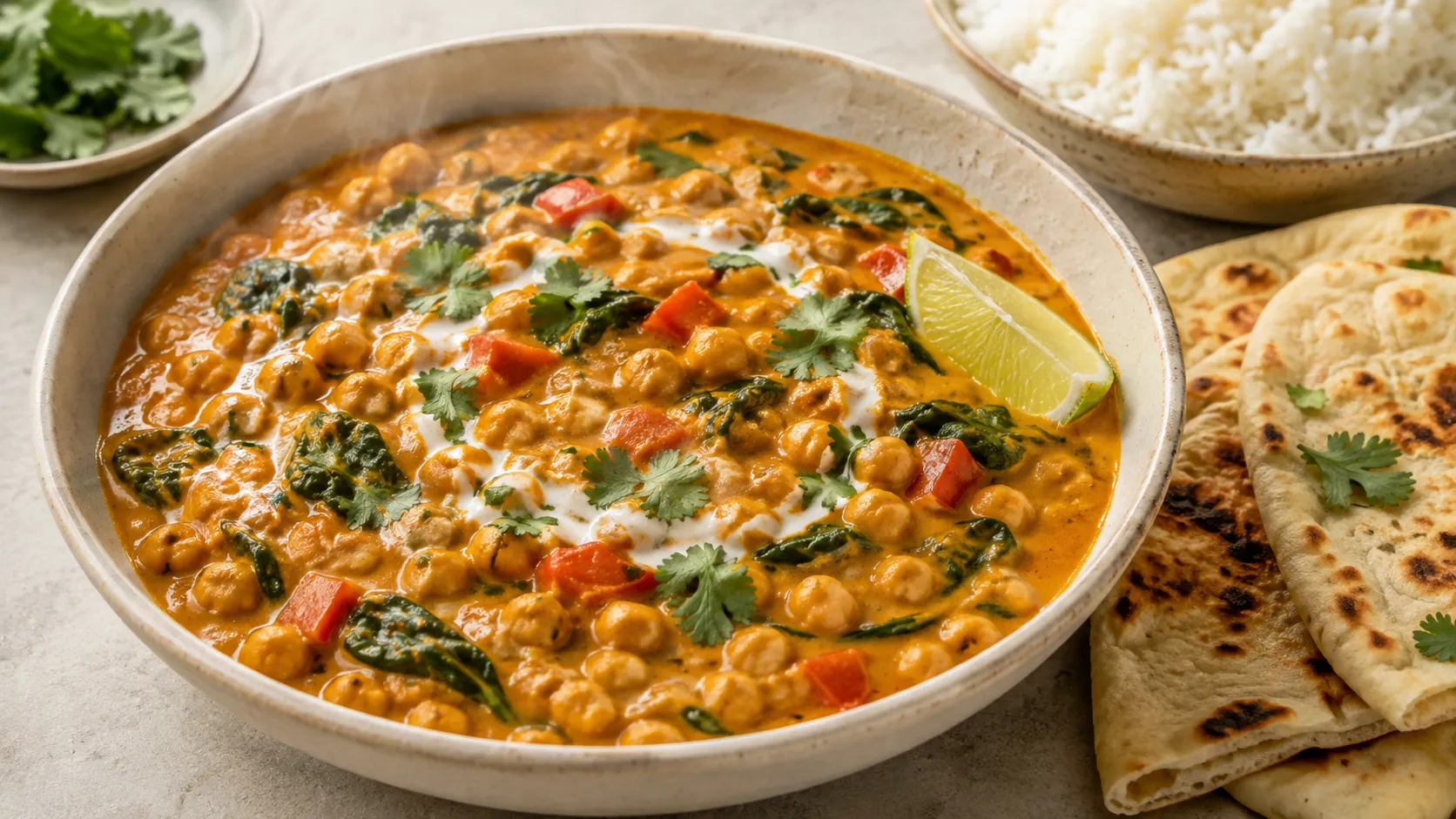
The moment garlic, ginger, and cumin hit warm oil, the kitchen starts smelling like dinner is going to be good. Once coconut milk joins the pan, the tomato-based sauce becomes creamy, fragrant, and perfect for spooning over hot rice.
This Easy Vegan Chickpea Curry With Coconut Milk is a cozy one-pot vegan dinner made with canned chickpeas and everyday spices. It’s filling without feeling heavy, naturally dairy-free, and easy enough for a busy weeknight.
Cooking the tomato paste and spices before adding the coconut milk gives this version a deeper, more balanced flavor without requiring a long simmer.
Why You’ll Love This Recipe
- It’s ready in about 30 minutes, with only 10 minutes of hands-on preparation.
- Two cans of chickpeas make six filling servings using affordable pantry ingredients.
- Full-fat coconut milk creates a smooth creamy curry sauce without dairy or added thickeners.
- The flavor is mild enough for a family dinner, but you can easily increase the heat.
- Leftovers keep well for four days and taste even better after the spices have time to settle.
Ingredients
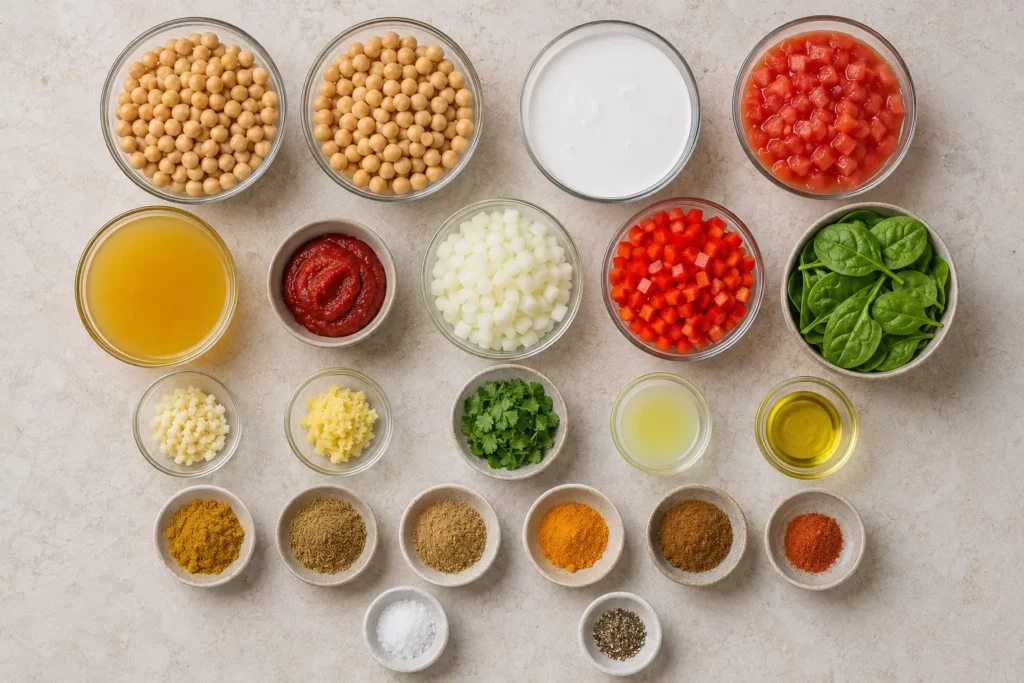
- 2 Tbsp olive oil or avocado oil (27 g)
- 1 medium yellow onion, finely diced (160 g)
- 1 medium red bell pepper, diced (150 g)
- 4 garlic cloves, finely minced (16 g)
- 1 Tbsp freshly grated ginger (15 g)
- 1 Tbsp mild or medium curry powder (8 g)
- 2 tsp ground cumin (5 g)
- 1 tsp ground coriander (2 g)
- 1 tsp ground turmeric (3 g)
- ½ tsp garam masala (1 g)
- ¼ tsp cayenne pepper (0.5 g), optional
- ¾ tsp fine sea salt (4.5 g), plus more to taste
- ¼ tsp freshly ground black pepper (0.5 g)
- 2 Tbsp tomato paste (32 g)
- 1 can diced tomatoes, 14.5 oz (411 g)
- 2 cans chickpeas, 15 oz each, drained and rinsed (about 500 g)
- 1 can full-fat unsweetened coconut milk, 13.5 oz (400 ml)
- ½ cup low-sodium vegetable broth (120 ml)
- 3 packed cups baby spinach (90 g)
- 1 Tbsp fresh lime juice (15 ml)
- ¼ cup chopped fresh cilantro (15 g)
Coconut milk: Use canned, full-fat coconut milk for the creamiest sauce. Refrigerated coconut beverage is too thin and won’t produce the same texture.
Chickpeas: Drain and rinse canned chickpeas thoroughly. This removes excess sodium and the thick canning liquid.
Curry powder: Curry powder blends vary in heat and flavor. Choose a fresh mild or medium blend, then add cayenne separately so you can control the spice level.
Garam masala: This aromatic spice blend adds warmth near the beginning of cooking. If your curry powder already contains a strong garam masala flavor, you can leave it out.
How to Make This Recipe
Step 1: Sauté the Vegetables
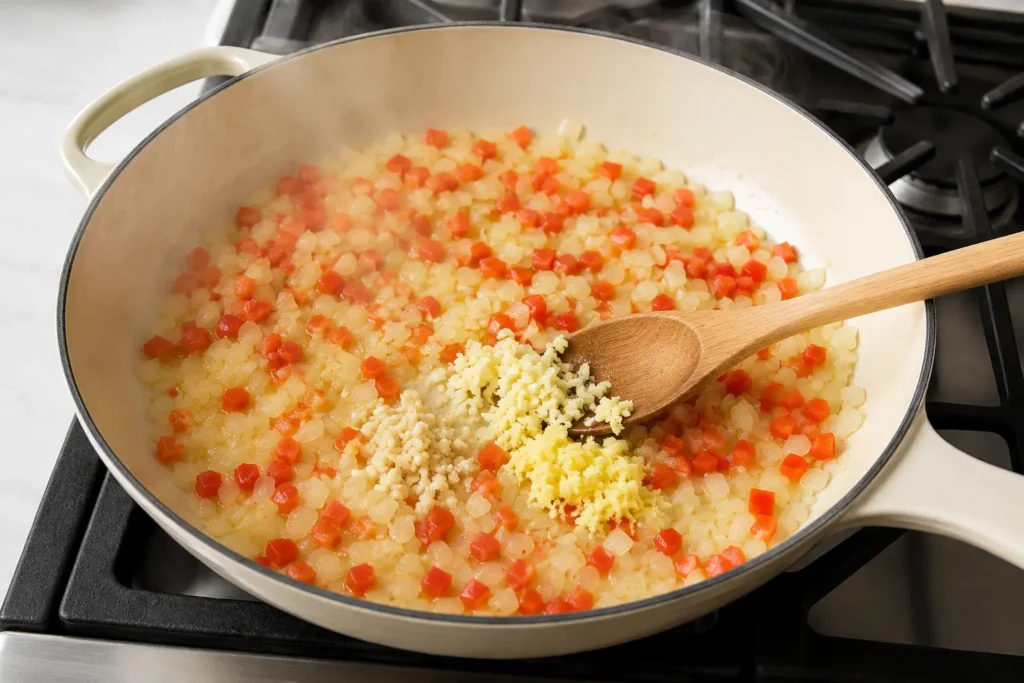
Heat the oil in a large skillet over medium heat. Add the onion and bell pepper, then cook for 5–6 minutes until softened. Stir in the garlic and ginger and cook for another 30 seconds, just until fragrant.
Step 2: Cook the Spices and Tomato Paste
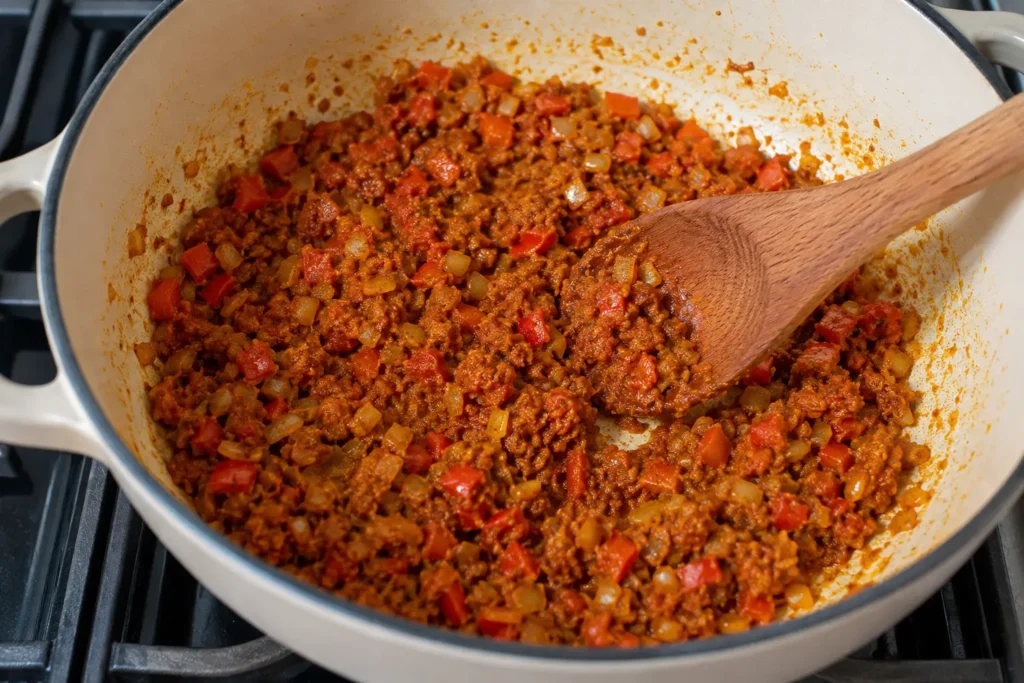
Add the curry powder, cumin, coriander, turmeric, garam masala, cayenne, salt, and black pepper. Stir for 30 seconds to release their aroma. Add the tomato paste and cook for 1–2 minutes, stirring until it turns slightly darker. Don’t let the spices burn, or the curry may taste bitter.
Step 3: Add the Chickpeas and Sauce Ingredients
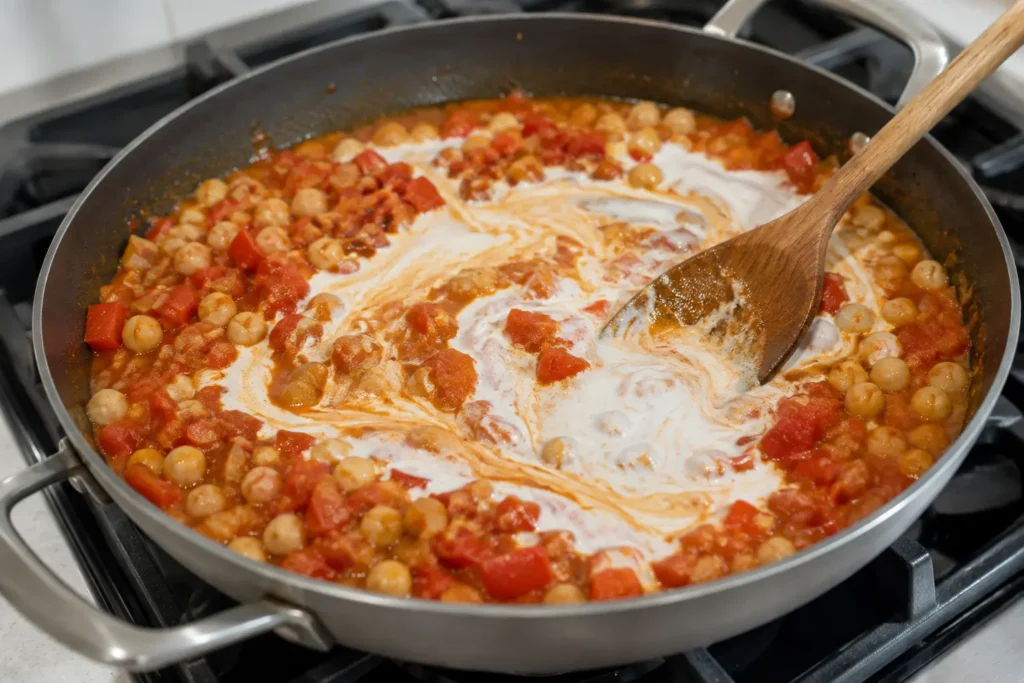
Pour in the diced tomatoes and vegetable broth, scraping any flavorful browned bits from the pan. Stir in the drained chickpeas and coconut milk until the sauce is smooth and evenly combined. Bring it to a gentle simmer over medium heat.
Step 4: Simmer Until Creamy
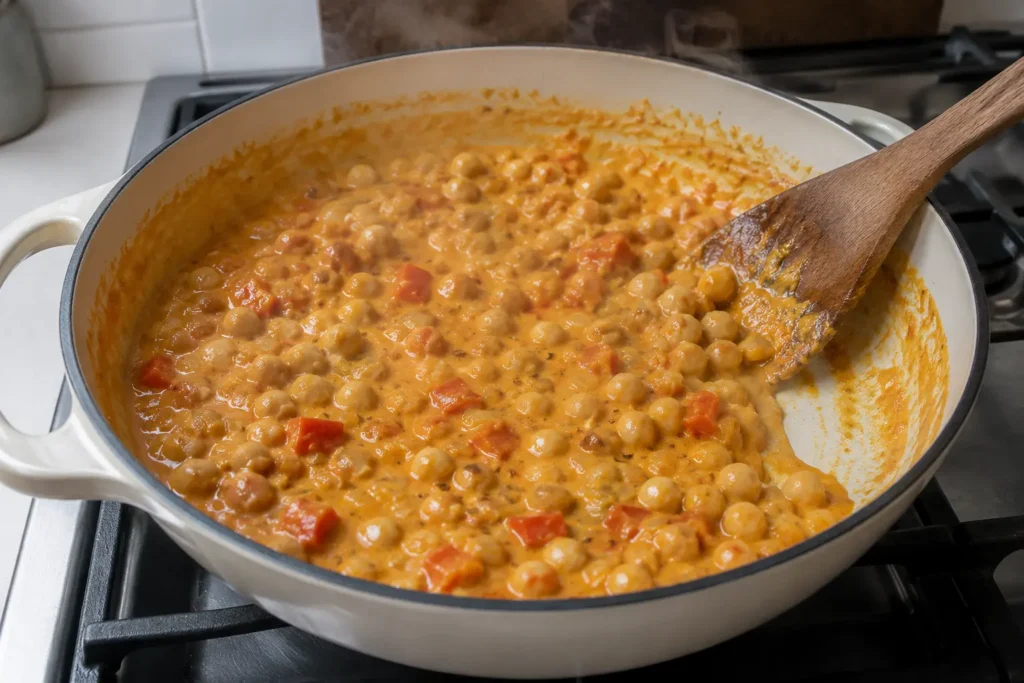
Reduce the heat to medium-low and simmer uncovered for 12–15 minutes, stirring occasionally. The sauce is ready when it lightly coats the back of a spoon. For a naturally thicker curry, mash about ½ cup of chickpeas against the side of the skillet and stir them back into the sauce.
Step 5: Add the Final Ingredients
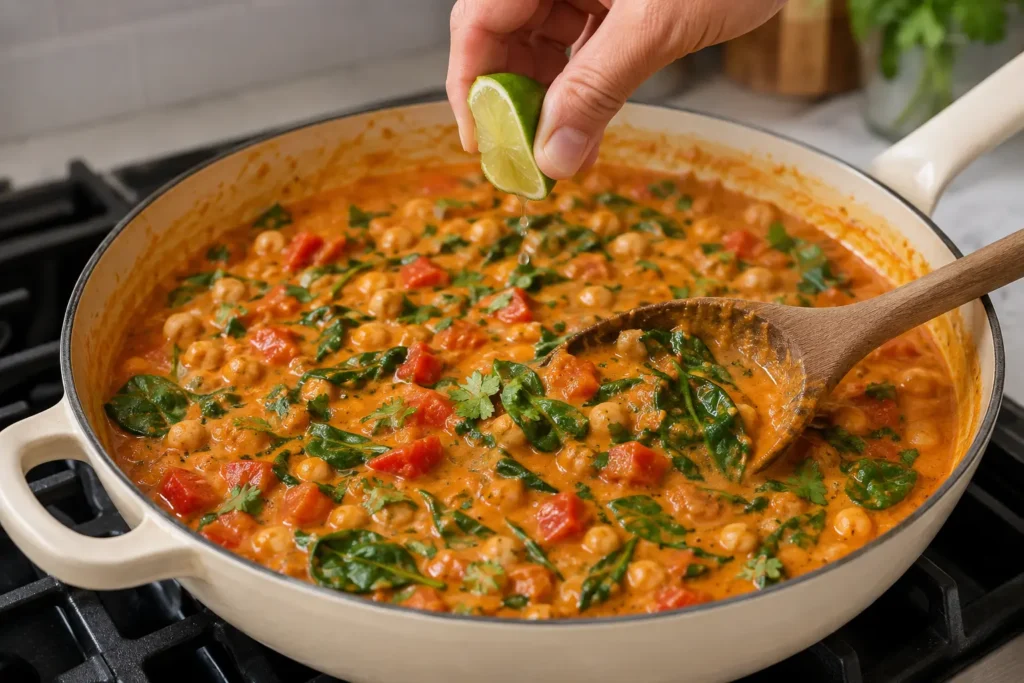
Fold in the spinach and cook for 1–2 minutes, just until wilted. Remove the skillet from the heat, then stir in the lime juice and half of the cilantro. Taste and adjust the salt or cayenne before letting the curry rest for 5 minutes and serving it with rice or naan.
Expert Tips for Perfect Results
- Use a wide skillet rather than a narrow saucepan. The larger surface area allows excess moisture to evaporate, helping the sauce thicken more quickly.
- Shake the coconut milk can before opening it. If the solid cream remains separated, scrape everything into the skillet and stir until smooth.
- Cook the onion until genuinely soft. Crunchy onion can make a short-simmered vegan chickpea curry taste unfinished.
- Don’t skip rinsing the chickpeas. Their canning liquid can add excess salt and occasionally gives the sauce a slightly metallic flavor.
- Fix a thin curry by simmering it uncovered for another 3–5 minutes or mashing more chickpeas. Don’t add flour directly because it can form lumps.
- Balance the finished curry before serving. Add salt for depth, lime for freshness, or a small pinch of sugar if your tomatoes taste unusually acidic.
Variations
- Add 1 finely chopped serrano pepper with the onion or increase the cayenne to ½ tsp for a spicy coconut chickpea curry.
- Replace the spinach with 3 cups chopped kale. Add it during the final 5–7 minutes because kale takes longer to soften.
- Add 1 cup small cauliflower florets or diced sweet potato with the tomatoes. Cut sweet potato into ½-inch cubes and simmer for 18–20 minutes, adding more broth when needed.
- Use light coconut milk for a lower-fat curry. The sauce will be thinner, so mash 1 cup of chickpeas and simmer it uncovered for a few extra minutes.
- This recipe is naturally vegan and dairy-free. For a gluten-free meal, check that the vegetable broth and spice blends are certified gluten-free.
Serving Suggestions
- Serve the curry over fluffy basmati rice with cilantro and fresh lime wedges for a simple, complete dinner.
- Pair it with warm vegan naan or roti to scoop up the creamy sauce.
- Spoon it over quinoa for a nutty flavor and additional plant-based protein.
- Add a cucumber and tomato salad dressed with lime juice for a cool contrast to the warm spices.
- Pair it with sparkling lime water, unsweetened iced tea, or a plant-based mango lassi to balance the curry’s richness.
Storage and Reheating
Allow the curry to cool, then transfer it to an airtight container. Refrigerate it for up to four days. Store cooked rice separately so it doesn’t soak up the sauce and become overly soft.
Freeze the curry in portion-sized, freezer-safe containers for up to three months. Leave a little space at the top because the sauce expands as it freezes. Thaw it overnight in the refrigerator before reheating.
For the best texture, reheat the curry in a covered saucepan over medium-low heat for 6–8 minutes, stirring occasionally. Add 1–2 Tbsp vegetable broth if the sauce is too thick. Microwave individual portions for 2–3 minutes, stirring halfway through, until the center reaches 165°F.
Ingredients
Method
- Heat the oil in a deep skillet over medium heat. Cook the onion and bell pepper for 5–6 minutes.
- Add the garlic and ginger, then cook for 30 seconds. Stir in the spices, salt, and black pepper; cook for another 30 seconds.
- Add the tomato paste and cook for 1–2 minutes, stirring until it darkens slightly.
- Pour in the diced tomatoes and broth, scraping up any browned bits from the pan.
- Stir in the chickpeas and coconut milk. Bring the mixture to a gentle simmer.
- Simmer uncovered over medium-low heat for 12–15 minutes. Mash about ½ cup of chickpeas to thicken the sauce.
- Add the spinach and cook for 1–2 minutes, just until wilted.
- Remove from the heat. Stir in the lime juice and half the cilantro, then rest for 5 minutes before serving.