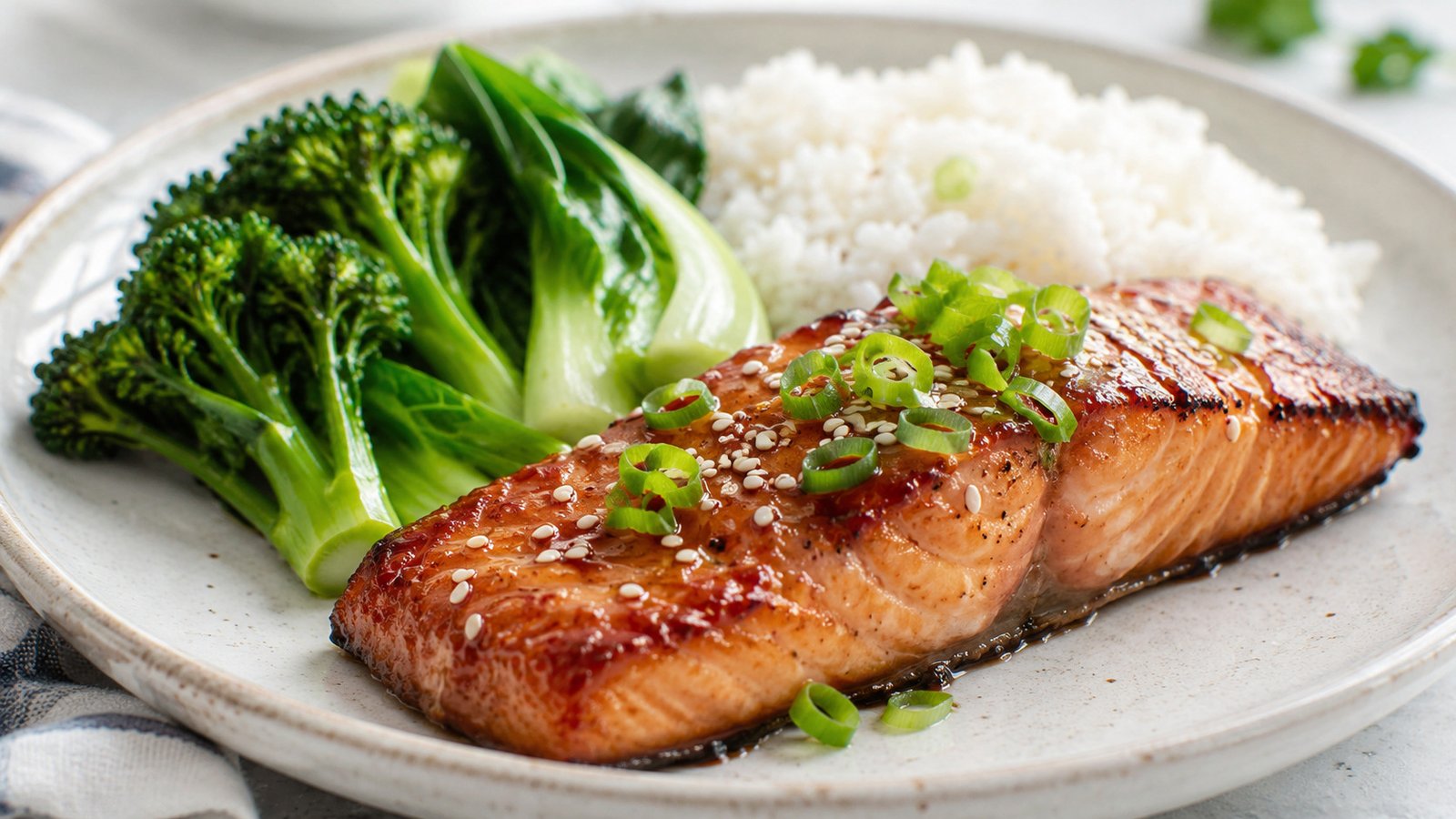
When the glaze starts bubbling around the edges and turning glossy and caramelized, you know dinner is close. Easy Miso-Glazed Salmon for Weeknights combines tender salmon with white miso, maple syrup, soy sauce, ginger, and sesame for a savory-sweet dinner that feels far more involved than it actually is.
The salmon goes from refrigerator to table in about 25 minutes, with no long marinade required. Baking cooks the center gently, while a brief broil gives the miso glaze those darker, slightly sticky edges. Better yet, the whole dish needs just one small mixing bowl and a sheet pan.
Why You’ll Love This Recipe
- Takes about 10 minutes to prep and 12 minutes to cook.
- Uses one small bowl and one sheet pan for minimal cleanup.
- No marinating time is required for full miso flavor.
- Makes four 6-oz salmon portions for an easy family dinner.
- The glaze can be mixed up to 3 days ahead for faster weeknight prep.
Ingredients
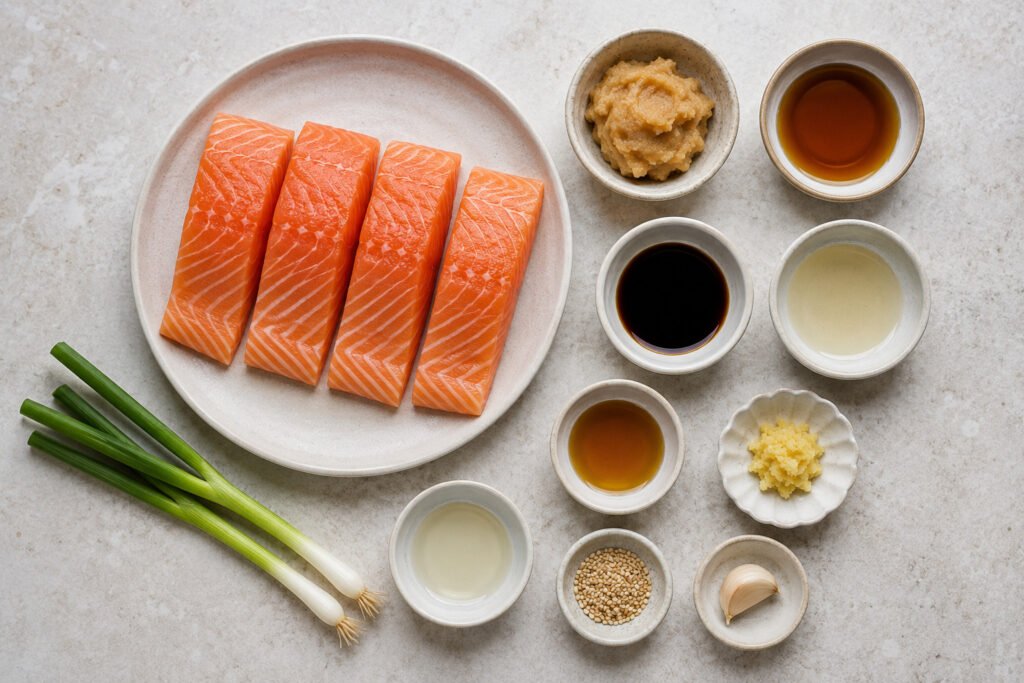
For the Miso-Glazed Salmon
- 4 salmon fillets, 6 oz (170 g) each
- 3 tbsp (54 g) white miso paste
- 2 tbsp (30 mL) pure maple syrup
- 1 tbsp (15 mL) low-sodium soy sauce
- 1 tbsp (15 mL) unseasoned rice vinegar
- 1 tsp (5 mL) toasted sesame oil
- 1 tsp fresh ginger, finely grated
- 1 garlic clove, finely grated
- 1 tsp (5 mL) neutral oil
White miso, sometimes labeled shiro miso, is a good choice here because its milder flavor works with salmon without making the glaze overly salty. Red miso is stronger and saltier, so it needs a small quantity adjustment if you substitute it.
Choose salmon fillets that are close to the same thickness so they finish cooking together. Skin-on or skinless fillets both work; if using skin-on salmon, place it skin-side down on the baking sheet.
For Serving
- 2 scallions, thinly sliced
- 1 tsp sesame seeds
The scallions add a fresh, crisp finish against the rich salmon. Sesame seeds are small, but they reinforce the toasted sesame flavor already in the glaze.
How to Make This Recipe
Step 1: Heat the Oven and Mix the Glaze
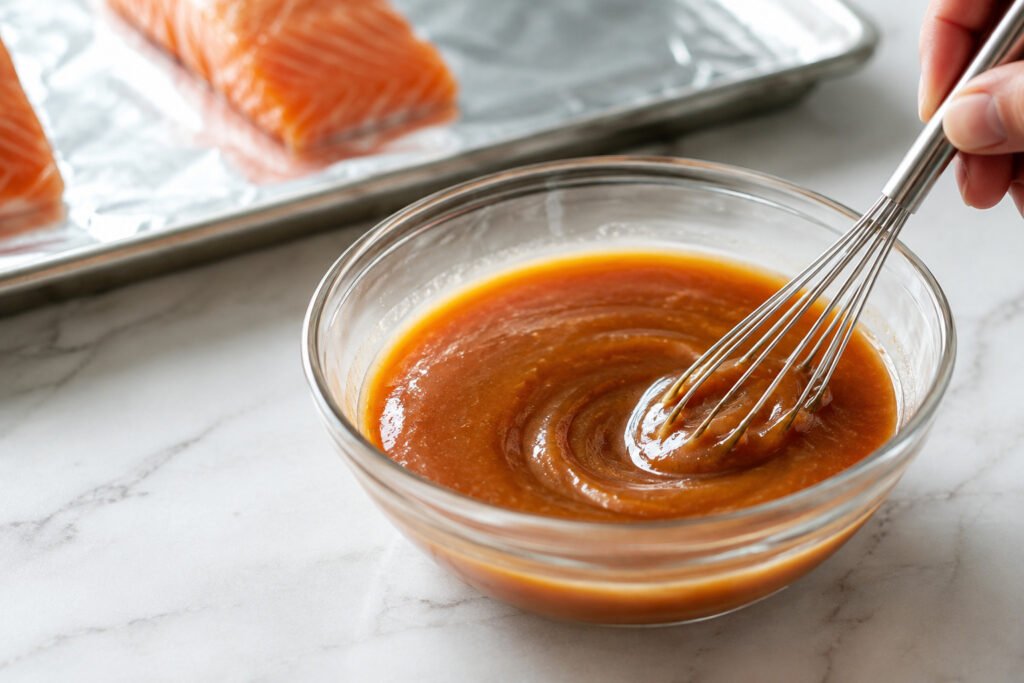
Preheat the oven to 425°F and position a rack in the upper-middle part of the oven, about 6 inches below the broiler. Line a rimmed baking sheet with foil. Whisk the miso, maple syrup, soy sauce, rice vinegar, sesame oil, ginger, and garlic in a small bowl until smooth and glossy.
Pro Tip: Break up the miso with the back of a spoon before whisking. This prevents little salty clumps from remaining in the finished glaze.
Step 2: Prepare and Glaze the Salmon
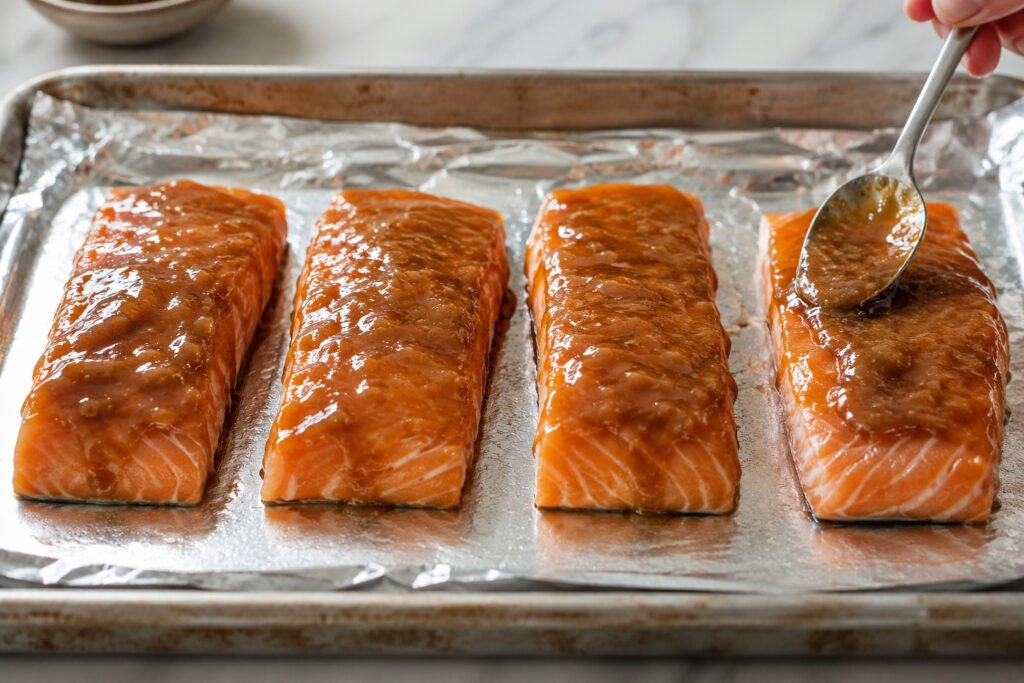
Pat the salmon dry with paper towels. Lightly coat the foil with 1 tsp neutral oil, then arrange the fillets skin-side down, if applicable, with a little space between them. Spoon the miso glaze evenly over the tops and sides, spreading it into a fairly thick layer.
Drying the fish matters because excess surface moisture can dilute the glaze and slow browning. Avoid pouring a pool of glaze around the salmon; those sugary drips can burn before the fish is finished.
Pro Tip: Keep most of the glaze on top of the fillets, where it can caramelize instead of scorching against the hot pan.
Step 3: Bake Until Nearly Done
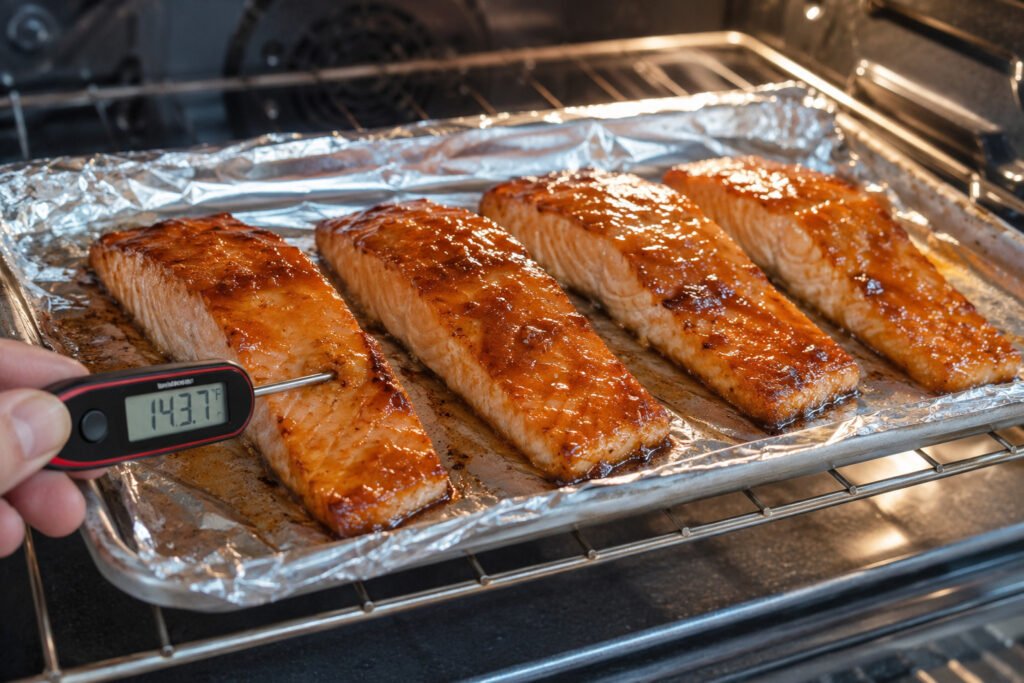
Bake the salmon at 425°F for 8 to 10 minutes, depending on thickness. The glaze should look set and glossy, and the salmon should begin turning opaque around the edges while remaining moist in the center.
Check the thickest fillet rather than relying only on the clock. Fish should reach 145°F in the center for food safety; properly cooked fish will also appear opaque and separate easily with a fork.
Step 4: Broil, Rest, and Serve
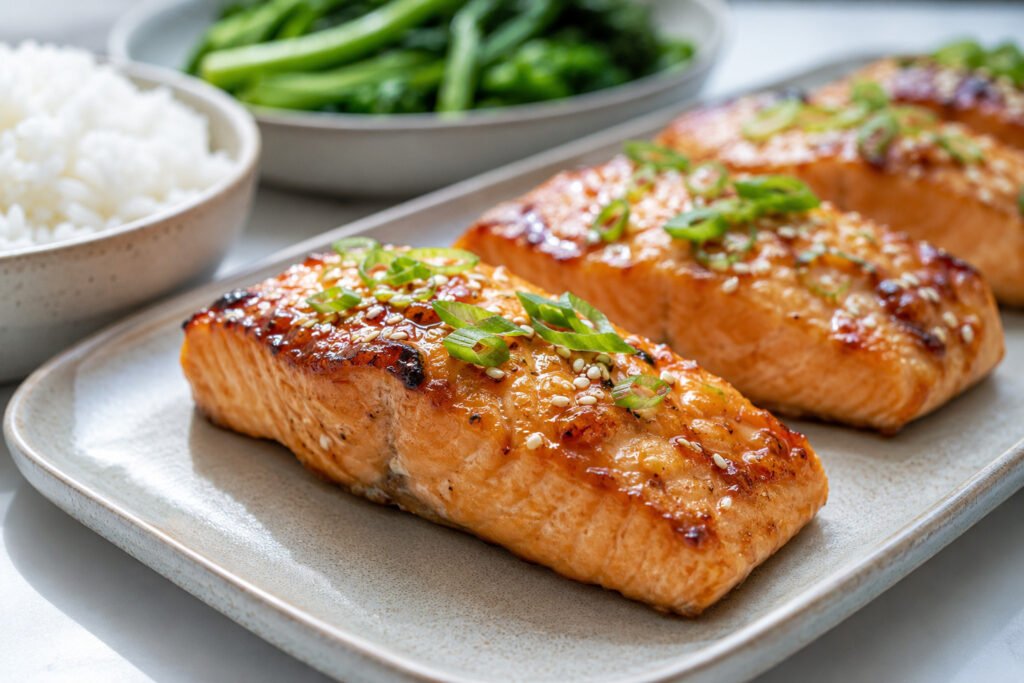
Switch the oven to broil and cook for 1 to 2 minutes, watching closely. The glaze should bubble and develop a few dark caramelized spots without turning black. Remove the salmon once it reaches 145°F, then let it rest for 2 minutes.
Sprinkle with scallions and sesame seeds before serving. This final broiling step is what gives Easy Miso-Glazed Salmon for Weeknights its glossy, lightly caramelized finish without requiring a long marinade.
Pro Tip: Don’t walk away during broiling. Miso and maple syrup contain ingredients that brown quickly, so the difference between caramelized and burned can be less than a minute.
Expert Tips for Better Results
- Use center-cut fillets when possible. Their more even thickness makes it easier to cook all four pieces at the same rate.
- Thaw frozen salmon completely before glazing. Partially frozen centers can stay undercooked while the miso coating becomes too dark.
- Leave some space between the fillets. Crowding traps steam and reduces surface caramelization.
- Use foil rather than parchment when finishing under a broiler, since parchment isn’t ideal for close exposure to intense broiler heat.
- If your salmon fillets are thinner than 1 inch, start checking them after about 7 minutes of baking.
- If the glaze darkens before the salmon reaches temperature, turn off the broiler and return the fish to the 425°F oven until the center is done.
Variations
- Honey miso salmon: Replace the 2 tbsp maple syrup with 2 tbsp honey for a slightly stickier, more floral glaze.
- Red miso version: Use 2 tbsp red miso instead of 3 tbsp white miso because red miso has a stronger, saltier flavor.
- Spicy miso salmon: Whisk 1 to 2 tsp sriracha or chili-garlic sauce into the glaze.
- Gluten-free: Replace the soy sauce with 1 tbsp certified gluten-free tamari and confirm that your miso is also gluten-free.
- Citrus miso salmon: Replace the rice vinegar with 1 tbsp fresh lime juice and add 1 tsp finely grated lime zest.
Serving Suggestions
- Serve the salmon over steamed jasmine rice or short-grain rice so the grains catch any glaze that runs from the fish.
- Add steamed or roasted broccoli, broccolini, or bok choy for a simple vegetable side that works well with miso and sesame.
- Pair it with a cucumber salad dressed with rice vinegar for a cool, crisp contrast to the rich salmon.
- Serve with edamame and rice for an easy salmon bowl that also works well for meal prep.
- Add shredded cabbage, carrots, and cucumber when you want a lighter plate with plenty of crunch.
Storage and Reheating
Cooked salmon shouldn’t remain at room temperature for more than 2 hours, or more than 1 hour when the surrounding temperature is above 90°F. Seafood should be refrigerated promptly at 40°F or colder.
Let leftover salmon cool briefly, then place it in a shallow airtight container and refrigerate for up to 3 days. Keep rice and vegetables in separate containers when possible so each component can be reheated properly.
For longer storage, wrap individual cooked portions tightly, place them in a freezer-safe container or bag, and freeze for up to 2 months for the best texture. Thaw frozen salmon overnight in the refrigerator rather than on the counter.
To reheat, place the salmon in a small covered baking dish and warm at 325°F for about 8 to 12 minutes, until heated through. Food-safety guidance recommends reheating leftovers to 165°F.
A microwave works for a quick lunch, but high power can make salmon dry and cause the glaze to become rubbery. Cover loosely and microwave at 50% power in 30-second intervals until thoroughly heated.
Easy Miso-Glazed Salmon for Weeknights
Ingredients
Method
- Preheat oven to 425°F. Position a rack about 6 inches below the broiler and line a rimmed baking sheet with foil.
- Whisk miso, maple syrup, soy sauce, rice vinegar, sesame oil, ginger, and garlic until smooth.
- Pat salmon dry. Lightly coat the foil with 1 tsp neutral oil and arrange salmon skin-side down, if applicable.
- Spread the miso glaze evenly over the tops and sides of the salmon.
- Bake for 8 to 10 minutes, until nearly cooked through.
- Broil for 1 to 2 minutes until the glaze bubbles and develops caramelized spots and the salmon reaches 145°F.
- Rest for 2 minutes, then top with scallions and sesame seeds before serving.