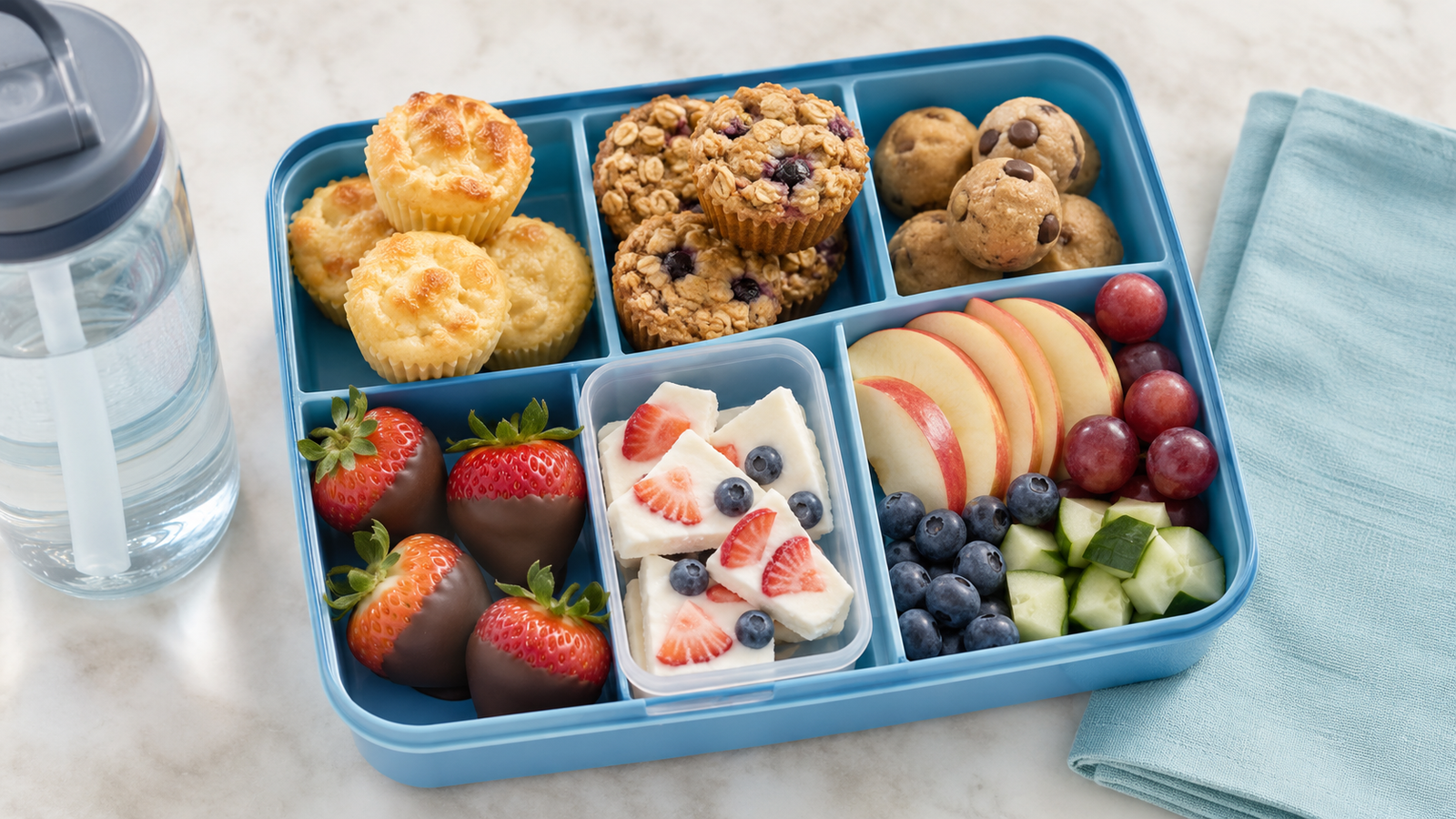
Packing school snacks sounds simple until you have to think about allergies, classroom rules, portability, and whether your child will actually eat what you pack. A good school snack needs to do more than taste good. It should be easy to carry, simple to eat between classes, and sturdy enough to survive a few hours inside a lunchbox without turning into a mess.
Nut-free snacks are especially useful for families whose schools or classrooms have allergy-aware policies. Even when a recipe does not intentionally contain peanuts or tree nuts, it is still important to read ingredient labels carefully and follow your school’s specific allergy guidelines, since packaged ingredients can sometimes be processed in facilities that also handle nuts.
The good news is that nut-free does not have to mean boring. From soft savory muffins and portable oatmeal cups to fruity frozen treats and bite-size snacks, there are plenty of ways to keep school snack time interesting. These five ideas work well for lunchboxes, after-school snacks, classroom celebrations, or busy mornings when you need something easy to grab and go.
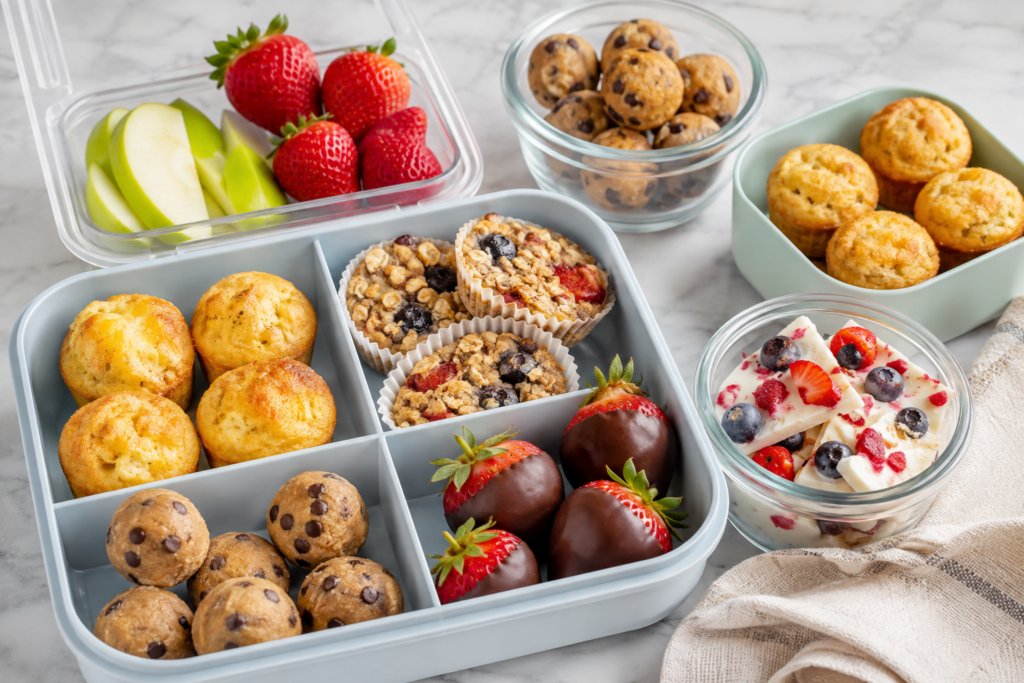
1. Cottage Cheese Muffins
Cottage Cheese Muffins are one of the most practical options for school days because they already come in an individual, easy-to-pack portion. There is no slicing or assembling required in the morning, and the muffin shape makes them much easier for kids to eat at a desk or during a short snack break than something that needs a fork and plate.
The cottage cheese helps give the muffins a soft, tender texture while also making them feel a little more substantial than a basic bakery-style muffin. Depending on the recipe, they can work as either a lightly savory snack or a mild breakfast-style option that fits comfortably into a lunchbox.
Another advantage is that muffins are easy to prepare ahead. Bake a batch during the weekend, cool them completely, and keep a few ready for the first couple of school days. Extras can usually be frozen individually so you are not baking from scratch every morning.
For younger children, smaller muffins can be especially useful because they are easier to finish during a short classroom snack period. Pair one with sliced fruit, berries, grapes cut appropriately for age, or a small serving of vegetables for a more complete snack.
When preparing these specifically for a nut-free classroom, keep mix-ins simple. Avoid nut flours, almond extract if your school restricts nut-related products, chopped nuts, and nut-based spreads. Always check labels on flour, chocolate chips, cheese, and other packaged ingredients if cross-contact is a concern.
Why It Works for School
Cottage cheese muffins are portable, relatively low-mess, easy to portion, and simple to make ahead. They also work well for children who prefer something soft and bread-like instead of crunchy packaged snacks.
2. Baked Oatmeal Cups for Meal Prep in 5 Easy Flavors
Baked Oatmeal Cups for Meal Prep in 5 Easy Flavors are another strong choice for school lunchboxes because they combine the comfort of oatmeal with the convenience of a muffin. Instead of packing a bowl of oatmeal that requires a spoon and careful transportation, baked oatmeal cups can be picked up and eaten by hand.
Their make-ahead nature is especially helpful on busy school mornings. You can bake a full tray at once, refrigerate several portions, and freeze the rest for later in the week. That makes them useful for families who want homemade snacks without adding another cooking task to every morning routine.
The different flavor possibilities also help prevent snack boredom. Fruit-based versions such as blueberry, strawberry, banana, apple-cinnamon, or pumpkin can all work well without relying on nuts. If your original recipe includes peanut butter, almond butter, pecans, walnuts, or similar ingredients in any of the variations, simply use only the versions that are genuinely nut-free for this particular article.
Texture matters with school snacks, too. Baked oatmeal cups should be moist enough that they do not crumble everywhere but firm enough to hold their shape inside a lunch container. Letting them cool completely before packing helps them set properly and prevents unwanted condensation.
For a simple lunchbox combination, one oatmeal cup can be paired with fresh fruit, yogurt, cheese, or another school-approved side. They can also work as a quick breakfast on mornings when children need something portable before heading out the door.
Why It Works for School
These oatmeal cups are portioned, freezer-friendly, easy to customize, and much more portable than traditional oatmeal. Their mild flavor and soft texture also make them approachable for a wide range of ages.
3. Healthy Frozen Yogurt Bark With Fresh Fruit
Healthy Frozen Yogurt Bark With Fresh Fruit brings something completely different to the snack rotation. It is cool, creamy, fruity, and visually appealing, which can make it feel more exciting than the usual crackers or packaged snack bars.
This option is best suited to situations where you can keep the snack properly chilled. It works particularly well as an after-school snack, a snack packed with reliable cold packs, or a treat served during a classroom activity where refrigeration is available. Because yogurt bark softens as it warms, it is not the best option for a lunchbox that will sit at room temperature for several hours.
Fresh fruit adds natural sweetness, color, and texture without requiring complicated ingredients. Strawberries, blueberries, raspberries, diced peaches, mango, or sliced banana can all work depending on the recipe and season. Keeping the toppings simple also makes it easier to maintain the nut-free theme.
For school use, break the bark into smaller pieces rather than oversized shards. Smaller pieces are easier for children to handle and create less mess as the yogurt begins to soften.
Be careful with toppings that are commonly added to yogurt bark recipes. Granola, chocolate, and cereal can sometimes contain nuts or carry cross-contact warnings, so check packaging carefully before including them in an allergy-aware classroom snack.
Why It Works for School
Frozen yogurt bark is colorful, kid-friendly, refreshing, and easy to customize with fruit. It is especially useful when you want a homemade snack that feels a little more like a treat without being overly complicated.
4. Protein Cookie Dough Bites No Bake
Protein Cookie Dough Bites No Bake can be a convenient option when you want something small, portable, and easy to portion. Their bite-size format is particularly useful for school snacks because children can eat one or two quickly without needing utensils or creating a lot of cleanup.
However, this is the recipe that needs the most careful adjustment for a nut-free article. Many no-bake energy bites and cookie dough bites traditionally use peanut butter, almond butter, cashew butter, almond flour, or other nut-based ingredients. For this roundup, the recipe should be specifically formulated without peanuts or tree nuts.
A school-safe alternative might use ingredients such as oats, seed-based spreads where permitted, sunflower seed butter, yogurt-based ingredients, cream cheese, or another binder appropriate to your recipe. Keep in mind that some schools may also have restrictions on seeds, so always follow the individual school’s policy rather than assuming one substitute is universally accepted.
These bites are useful because they can usually be prepared ahead and stored in small portions. Keeping them relatively small also makes them easier for children to eat during a short snack period.
If you add chocolate chips, cereal pieces, dried fruit, or protein powder, check labels carefully. A recipe can be free from nut ingredients but still use products carrying cross-contact warnings, which may matter in classrooms with strict allergy policies.
Why It Works for School
Cookie dough bites are compact, easy to prepare ahead, and convenient to portion into small containers. When made with carefully selected nut-free ingredients, they can add variety to a lunchbox without taking up much space.
5. Chocolate Covered Strawberries Easy
Chocolate Covered Strawberries Easy are best thought of as an occasional school treat rather than an everyday snack. They work particularly well for classroom parties, Valentine’s Day celebrations, birthdays, end-of-year events, or any occasion when you want something that feels special without preparing a complicated dessert.
Fresh strawberries already have plenty of natural sweetness, so a thin chocolate coating is usually enough. The combination gives children the familiar flavor of chocolate while still keeping fresh fruit at the center of the snack.
For classroom use, smaller strawberries are often easier to manage than oversized ones. Let the chocolate set completely before packing them so they do not stick together or smear inside the container.
Chocolate is another ingredient where label checking matters. Some chocolate products are manufactured on shared equipment with peanuts or tree nuts, so choose chocolate that meets the allergy requirements of the classroom you are serving.
Because strawberries are perishable, these should also be kept cool until serving. Pack them with an ice pack when sending them in a lunchbox, and avoid leaving them sitting in a warm backpack for extended periods.
Why It Works for School
Chocolate-covered strawberries are simple, colorful, portion-controlled, and fun enough for classroom celebrations. They offer an easy alternative to heavily frosted cupcakes or more elaborate desserts when you want a small treat.
How to Make School Snacks More Lunchbox-Friendly
The best school snacks are not necessarily the most elaborate ones. In fact, simple recipes often travel better and are easier for children to eat independently.
Think about how the snack will behave several hours after you pack it. A beautiful snack that melts, leaks, becomes soggy, or needs several utensils may not be practical for an ordinary school day.
Individual portions usually work best. Muffins, oatmeal cups, small bites, sliced fruit, and compact treats are easier to pack and help avoid oversized portions.
Texture is important as well. Avoid snacks that crumble heavily or contain sauces that can spill inside a backpack. When packing softer foods, use a sturdy reusable container rather than a thin sandwich bag.
For snacks that need refrigeration, use an insulated lunchbox with a reliable ice pack and follow your school’s food-storage rules.
Tips for Keeping Snacks Nut-Free
A recipe can look nut-free on paper while still containing ingredients that require extra attention. Chocolate chips, granola, cereal, flour, protein powder, crackers, and other packaged foods may carry allergy advisory statements depending on how they are produced.
Always read the current package rather than relying on a product you have purchased before, since manufacturing information can change.
If you are preparing snacks for an entire classroom rather than only your own child, ask the school or teacher about allergy requirements first. Some classrooms may have restrictions beyond peanuts and tree nuts.
Also avoid assuming that homemade automatically means safer. Clean preparation surfaces, utensils, baking pans, and storage containers carefully if they have previously been used with nut-containing foods and cross-contact needs to be avoided.
What Makes a Good Classroom Snack?
A classroom snack should be easy for both children and teachers to manage. Ideally, it should open quickly, require little or no cleanup, and be easy to finish during a relatively short snack break.
Foods that are already portioned tend to work especially well. Muffins, oatmeal cups, fruit, and small snack bites can usually be eaten without plates or complicated utensils.
Strong-smelling, extremely sticky, highly crumbly, or very messy snacks are less convenient in a classroom setting, even when children enjoy them at home.
Age matters as well. Foods should always be cut or prepared in a way that is appropriate for the child eating them.
Packing Nut-Free Snacks for Lunchboxes
Let baked snacks cool completely before packing them. Warm muffins or oatmeal cups release steam inside a closed container, which can make them damp and sticky.
For chilled snacks, use an insulated lunch bag and ice pack. Yogurt bark, chocolate-covered strawberries, dairy-rich muffins, and similar foods need more temperature control than shelf-stable crackers or dry snacks.
Small reusable containers are helpful for fragile foods because they prevent snacks from becoming crushed underneath books, water bottles, or other lunch items.
If you prepare snacks in batches, label freezer containers with the recipe and date so you can easily rotate through different options instead of serving the same snack every day.
Easy Nut-Free Snack Pairings
You do not always need to pack several homemade recipes together. One homemade snack plus one simple side is usually enough.
Cottage cheese muffins can be paired with berries or apple slices. Baked oatmeal cups work nicely with yogurt or fresh fruit. Nut-free cookie dough bites can be served with sliced strawberries, while a small portion of chocolate-covered strawberries can accompany a plain muffin or another more filling snack.
The goal is not to create a Pinterest-perfect lunchbox every morning. It is to pack something realistic, manageable, and enjoyable enough that it actually gets eaten.