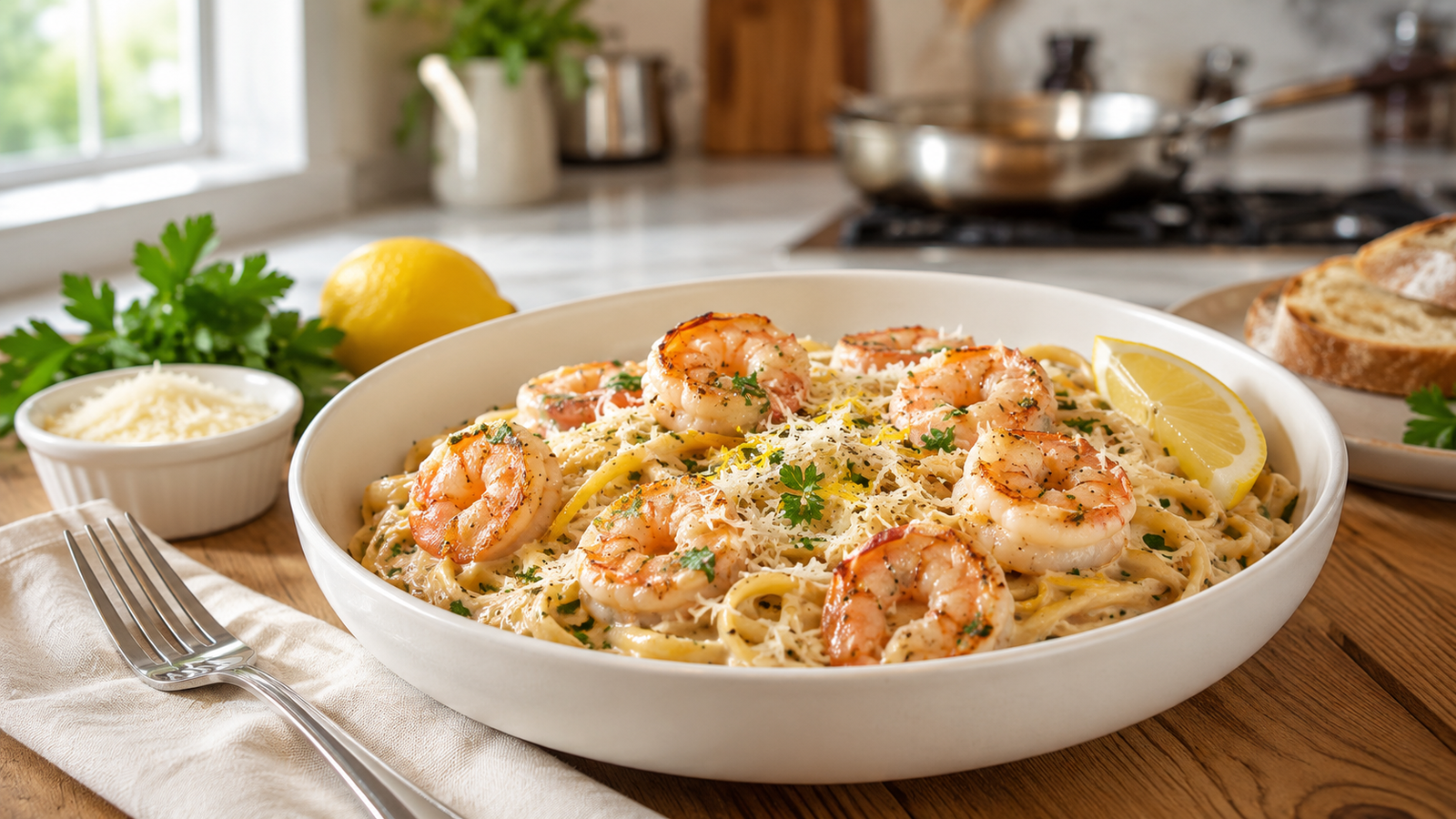
Garlic melting into butter is one of those kitchen smells that makes people wander in and ask what’s for dinner. Add fresh lemon and a splash of cream, and the whole kitchen suddenly feels like your favorite neighborhood Italian restaurant. It happens every time I make this recipe, and I never get tired of it.
This Creamy Lemon Garlic Shrimp Pasta 20 Min recipe is one I rely on when I need dinner on the table fast but still want something that feels homemade. The sauce is rich without being heavy, the shrimp stay tender, and everything comes together in about twenty minutes. My favorite trick is letting the shrimp finish in the sauce instead of cooking them all the way at the start. It takes almost no extra effort, but the texture is noticeably better.
Why You’ll Love This Recipe
- Ready in about 20 minutes, making it perfect for busy weeknights.
- Tender shrimp cook quickly and stay juicy instead of turning rubbery.
- The silky creamy lemon garlic sauce coats every strand of pasta beautifully.
- Made with simple grocery-store ingredients you may already have at home.
- Easy to customize with vegetables, extra spice, or a different type of pasta.
Ingredients
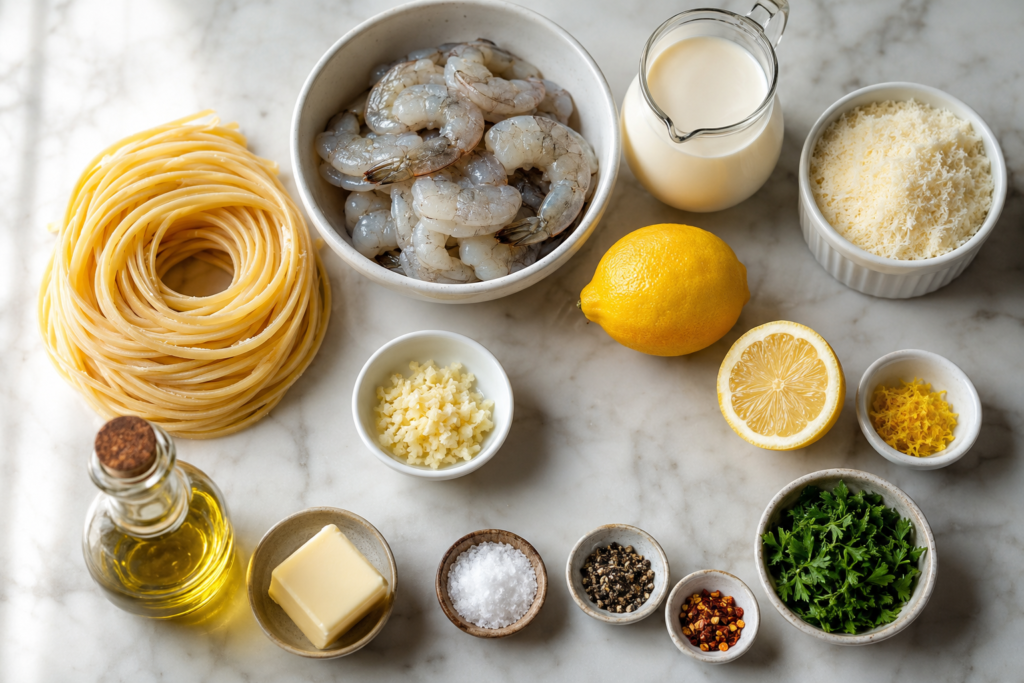
- 8 oz (225 g) linguine or fettuccine
- 1 lb (450 g) large raw shrimp, peeled and deveined
- 2 tbsp (28 g) unsalted butter
- 1 tbsp (15 ml) olive oil
- 5 garlic cloves (20 g), finely minced
- 1 cup (240 ml) heavy cream
- ½ cup (50 g) freshly grated Parmesan cheese
- 1 tsp (2 g) lemon zest
- 2 tbsp (30 ml) fresh lemon juice
- ½ tsp (3 g) kosher salt, plus more for the pasta water
- ½ tsp (1 g) freshly ground black pepper
- ¼ tsp crushed red pepper flakes (optional)
- 2 tbsp (8 g) chopped fresh parsley
- ¼ cup (60 ml) reserved pasta water
Ingredient Notes
Shrimp: Large raw shrimp are the best choice because they cook evenly and stay juicy. If you’re using frozen shrimp, thaw them completely and pat them dry before they go into the skillet.
Parmesan Cheese: Freshly grated Parmesan melts into a smooth sauce. Pre-shredded cheese often contains anti-caking ingredients that can leave the sauce slightly grainy.
Heavy Cream: Full-fat heavy cream creates the smooth, velvety texture that makes this creamy shrimp pasta so satisfying. Lighter dairy products won’t thicken the same way.
Fresh Lemon: Use both the zest and the juice. The zest adds most of the lemon aroma, while the juice brings brightness that balances the richness of the cream.
Pasta: Linguine and fettuccine are my favorites because they catch every bit of the lemon garlic sauce, but spaghetti works well if that’s what you have.
How to Make It
Step 1: Cook the Pasta
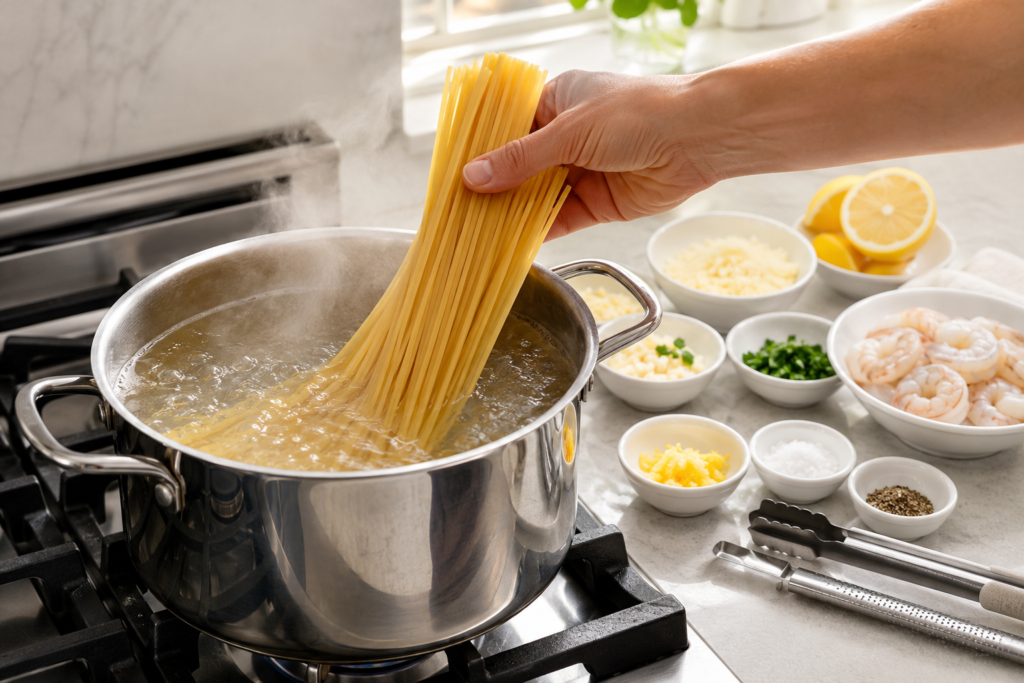
Bring a large pot of generously salted water to a rolling boil. While the water heats, mince the garlic, grate the Parmesan, zest the lemon, squeeze the juice, and chop the parsley. This recipe comes together quickly, so having everything ready makes the rest of the cooking feel effortless.
Add the pasta and cook until it’s just al dente according to the package directions. Before draining, scoop out about ¼ cup of the pasta water. I almost never skip this step because the starch in that water helps the sauce cling to the pasta instead of sliding off.
Pro Tip: Cook the pasta about one minute less than the package suggests. It’ll finish cooking in the sauce and absorb even more flavor.
Step 2: Sear the Shrimp
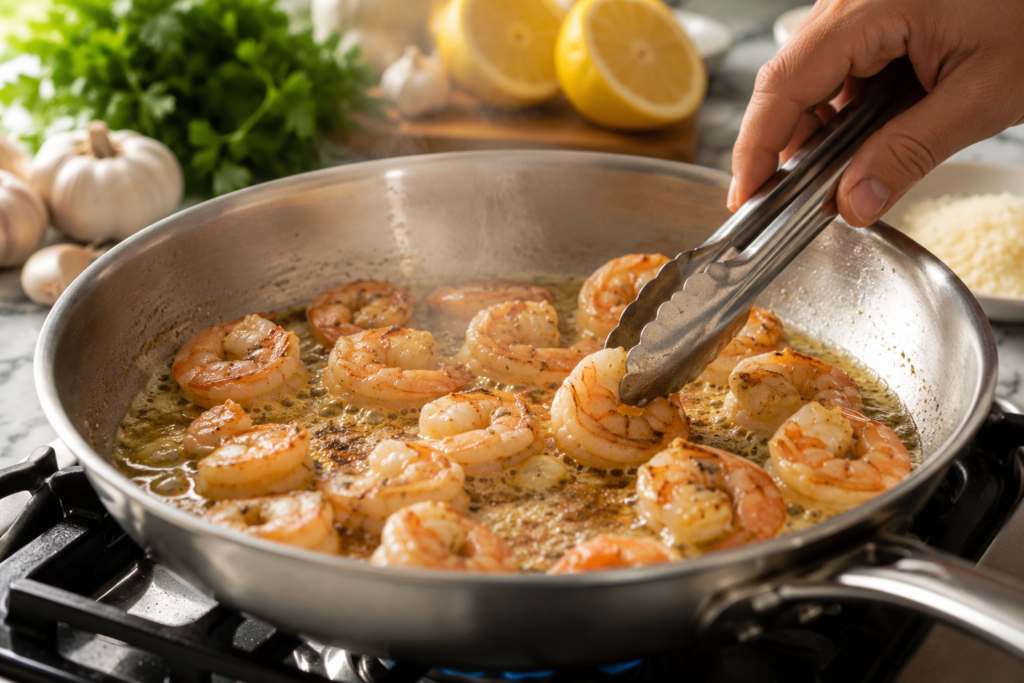
Pat the shrimp completely dry with paper towels, then season them with the salt and black pepper. Dry shrimp develop much better color in the skillet, which means better flavor in the finished dish.
Heat the butter and olive oil in a large skillet over medium-high heat until the butter begins to foam. Arrange the shrimp in a single layer and cook for about 1½ to 2 minutes per side. Once they’re lightly golden and just turning pink, transfer them to a plate.
Common Mistake to Avoid: Don’t crowd the pan. If the shrimp are packed too closely together, they’ll steam instead of sear and won’t develop that lightly caramelized flavor.
Step 3: Make the Creamy Lemon Garlic Sauce
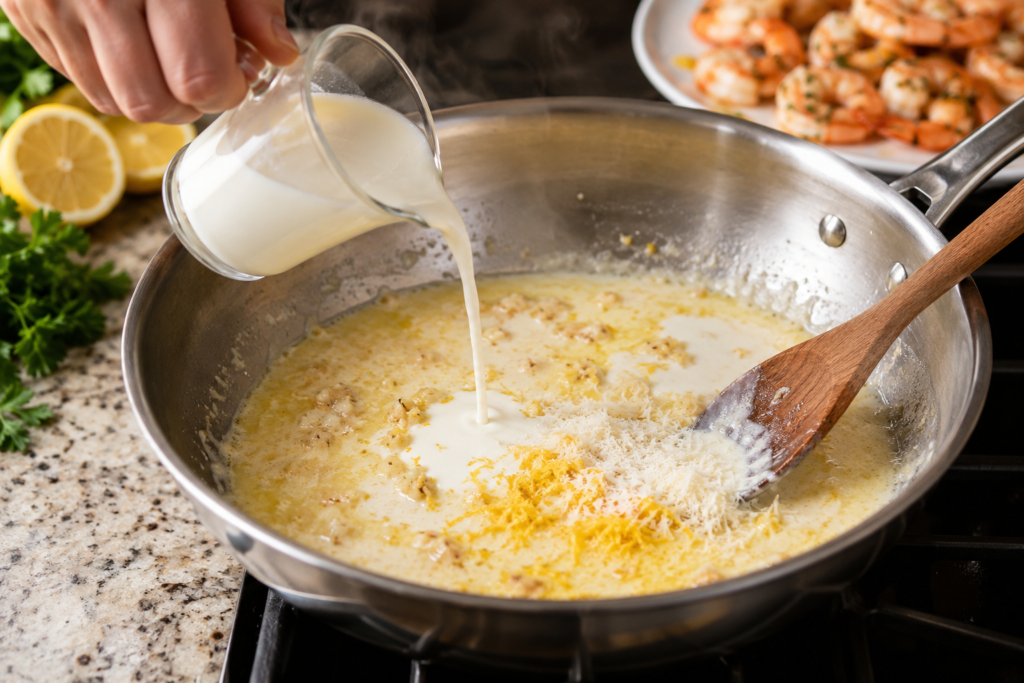
Reduce the heat to medium and add the minced garlic to the same skillet. Stir for about 30 seconds, just until it becomes fragrant. Garlic burns quickly, so keep it moving and don’t let it brown.
Pour in the heavy cream and let it simmer gently for about 2 minutes. Add the Parmesan a little at a time, stirring until the sauce becomes smooth. Finish with the lemon zest and fresh lemon juice. At this point, the sauce should look silky enough to coat the back of a spoon without feeling overly thick.
Pro Tip: Stir the lemon juice in after the cream has warmed. It keeps the sauce smooth and gives the lemon a fresher flavor.
Step 4: Toss Everything Together
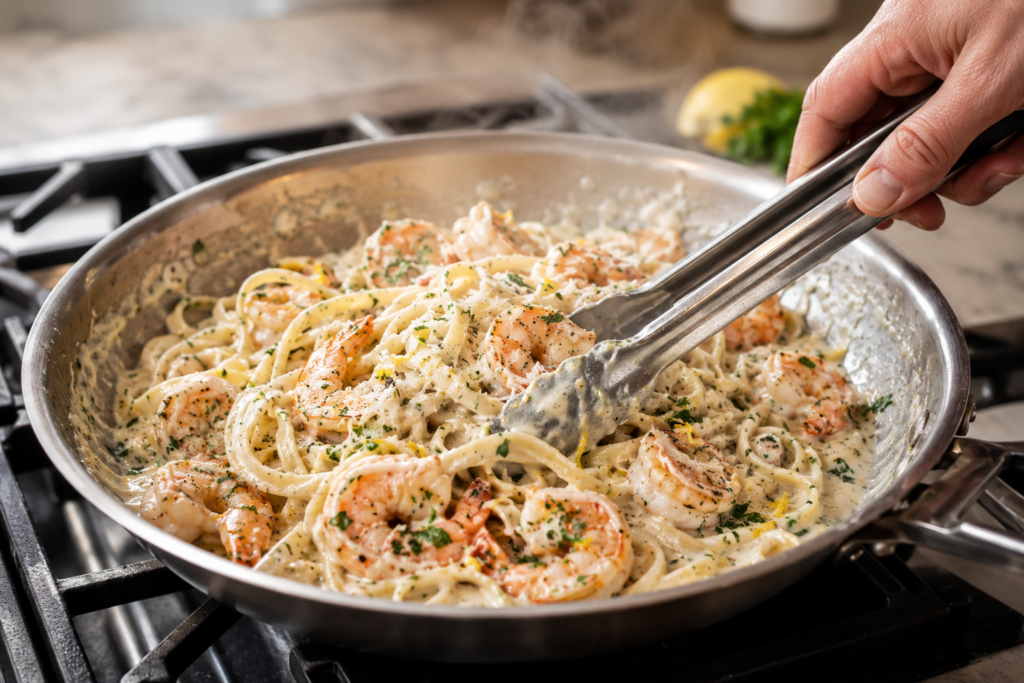
Add the cooked pasta directly to the skillet and gently toss until every strand is coated in the sauce. If it looks a little thick, stir in the reserved pasta water one tablespoon at a time. You’ll see the sauce become glossy almost immediately.
Return the shrimp and any juices from the plate to the skillet. Toss everything together for about 1 minute, just until the shrimp are heated through. I learned this the hard way years ago—shrimp only need that final minute, or they quickly become chewy.
Step 5: Finish and Serve
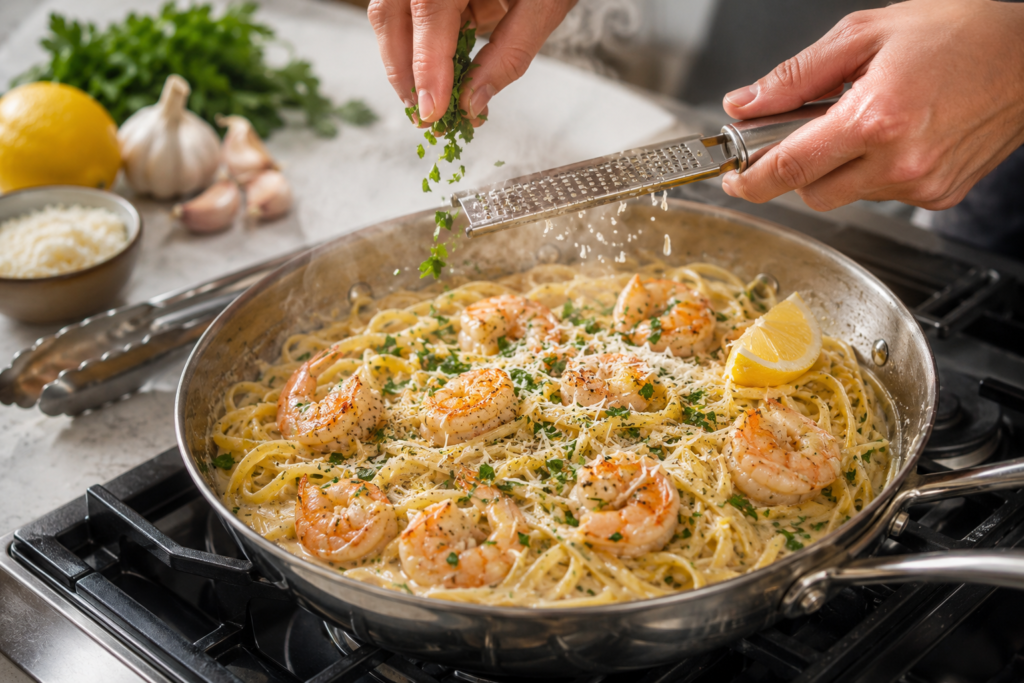
Turn off the heat and sprinkle the fresh parsley over the pasta. Taste one last bite and adjust the seasoning with another squeeze of lemon juice, a little black pepper, or a pinch of salt if needed.
Serve immediately with extra Parmesan and fresh lemon wedges on the side. The sauce is at its silkiest while it’s hot, so this is one of those dinners that’s best enjoyed the moment it reaches the table.
Expert Tips for Perfect Results
- Let the shrimp sit at room temperature for 10–15 minutes before cooking so they sear instead of steam.
- Salt the pasta water well. It’s the easiest way to season the pasta from the inside.
- Reserve extra pasta water in case the sauce thickens before serving.
- Keep the sauce at a gentle simmer to prevent it from becoming too thick or separating.
- Use freshly grated Parmesan for the smoothest, creamiest sauce.
- Finish with a squeeze of fresh lemon juice just before serving to brighten the flavors.
Variations
- Use your favorite gluten-free pasta for an easy gluten-free version.
- Replace the butter with olive oil and the cream with full-fat coconut cream for a dairy-free option.
- Add spinach, mushrooms, asparagus, or broccoli for extra vegetables.
- Stir in extra crushed red pepper flakes or Cajun seasoning for a spicy version.
- Mix in a little extra Parmesan or mozzarella for an even creamier finish.
Serving Suggestions
- Serve with warm garlic bread to soak up the creamy sauce.
- Pair with a Caesar salad or simple arugula salad for a fresh contrast.
- Add roasted broccoli, asparagus, or green beans for an easy vegetable side.
- Garnish with Parmesan, parsley, black pepper, and fresh lemon wedges before serving.
- Enjoy with sparkling lemon water or a chilled Pinot Grigio.
Storage & Reheating
Store leftovers in an airtight container in the refrigerator for up to 3 days or freeze for up to 2 months.
Reheat gently in a skillet over medium-low heat with 2–3 tablespoons of milk, cream, or chicken broth for 4–5 minutes, stirring until smooth. For the microwave, heat at 50% power in 30-second intervals, stirring between each round to keep the shrimp tender.
Ingredients
Method
- Cook the pasta until al dente and reserve ¼ cup pasta water.
- Season and sear the shrimp for 1½–2 minutes per side, then transfer to a plate.
- Cook the garlic, add the cream, Parmesan, lemon zest, and lemon juice to make the sauce.
- Toss the pasta with the sauce, adding reserved pasta water if needed.
- Return the shrimp to the skillet and cook for 1 minute.
- Garnish with parsley, extra Parmesan, and serve immediately.
Notes
- Don’t overcook the shrimp.
- Freshly grated Parmesan melts more smoothly than pre-shredded cheese.
- Reserved pasta water helps create a glossy, restaurant-style sauce.