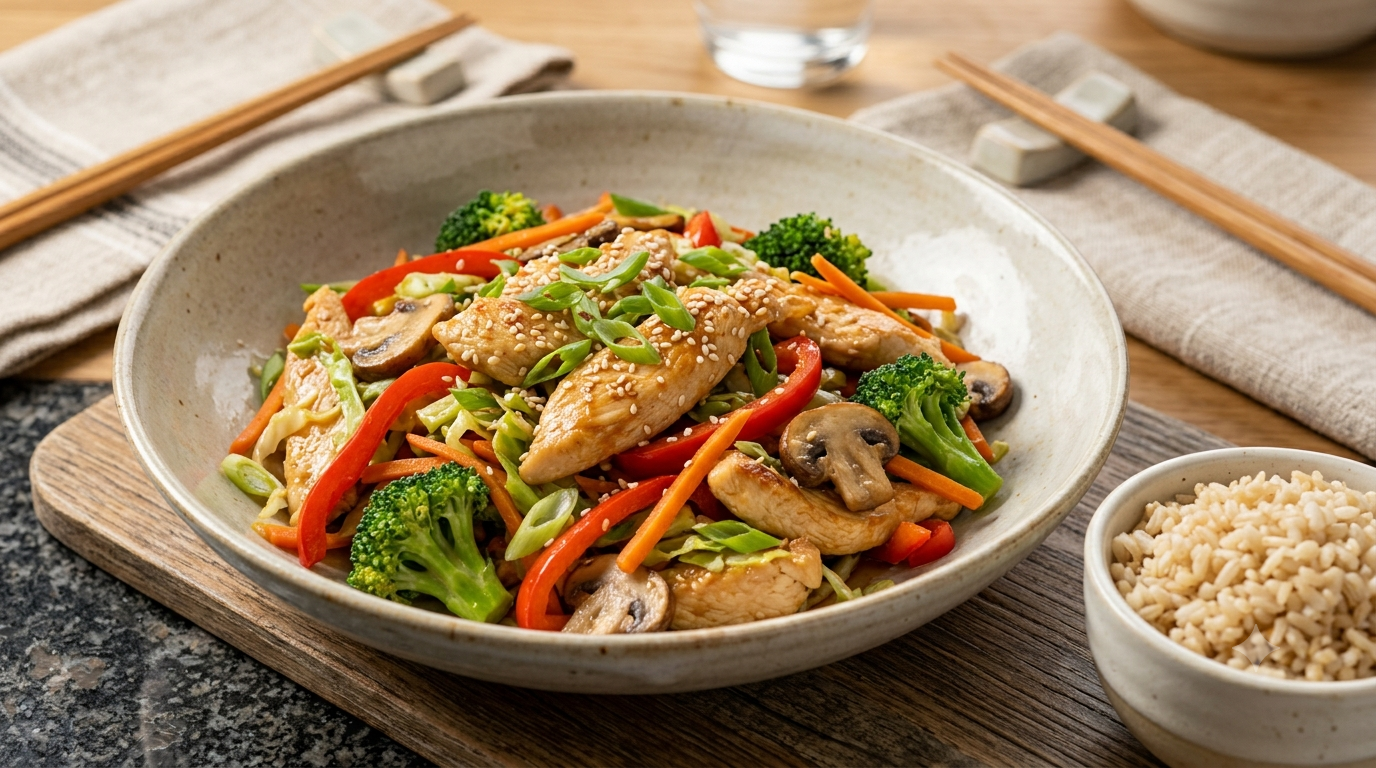
The sound of chicken and fresh vegetables sizzling in a hot skillet always makes dinner feel promising. Add garlic, fresh ginger, and a light savory sauce, and the whole kitchen smells incredible within minutes.
This Gut Healthy Chicken Vegetable Stir Fry is packed with lean chicken, colorful vegetables, and fiber-rich ingredients. It’s quick enough for a busy weeknight and keeps well for lunch the next day.
Cooking the chicken and vegetables separately is the secret. It keeps the chicken tender and prevents the vegetables from becoming soft or watery.
Why You’ll Love This Recipe
- Dinner is ready in about 30 minutes from start to finish.
- Broccoli, cabbage, carrots, mushrooms, and bell pepper add plenty of color and texture.
- The homemade sauce contains less sugar than most bottled stir-fry sauces.
- Each serving provides lean protein and several fiber-rich vegetables.
- Leftovers stay fresh in the refrigerator for up to four days.
Ingredients
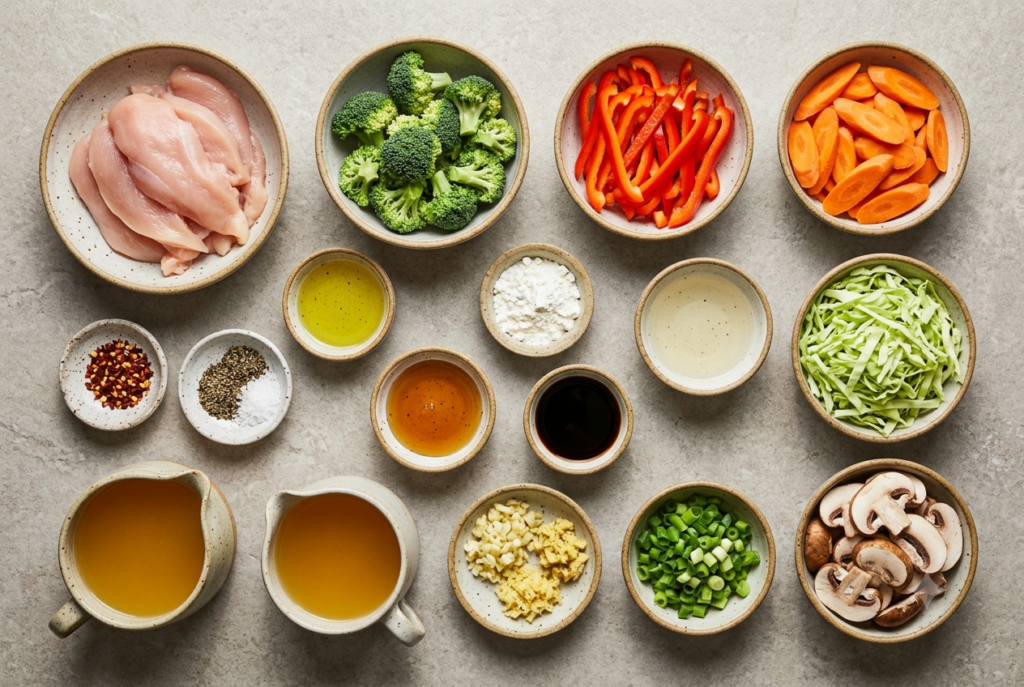
Chicken and Vegetables
- 1 lb (454 g) boneless, skinless chicken breast, thinly sliced
- 1 tbsp (15 ml) avocado oil, divided
- 2 cups (180 g) broccoli florets
- 1 red bell pepper, thinly sliced, about 1 cup (150 g)
- 1 medium carrot, thinly sliced, about ¾ cup (90 g)
- 2 cups (140 g) thinly sliced green cabbage
- 1 cup (70 g) sliced cremini mushrooms
- 3 green onions, sliced, about ⅓ cup (35 g)
- 2 garlic cloves, minced, about 2 tsp (6 g)
- 1 tbsp (6 g) freshly grated ginger
- ¼ tsp (1 g) fine sea salt
- ⅛ tsp (0.3 g) black pepper
Chicken breast keeps this healthy chicken stir-fry lean and quick. You can also use boneless chicken thighs for a slightly richer flavor and softer texture.
Cut the vegetables into similar-sized pieces so they cook evenly. Thinly slice the carrots because they take longer to soften than cabbage and bell pepper.
Stir-Fry Sauce
- ⅓ cup (80 ml) low-sodium chicken broth
- 3 tbsp (45 ml) low-sodium soy sauce
- 1 tbsp (15 ml) rice vinegar
- 2 tsp (10 ml) toasted sesame oil
- 2 tsp (14 g) honey
- 2 tsp (6 g) cornstarch
- ¼ tsp red pepper flakes, optional
Low-sodium soy sauce gives the sauce plenty of flavor without making the finished dish overly salty. Use certified gluten-free tamari when needed.
Cornstarch thickens the sauce and helps it coat the chicken and vegetables. Always mix it with cool liquid before adding it to the hot skillet.
How to Make Gut Healthy Chicken Vegetable Stir Fry
Prepare the Ingredients.
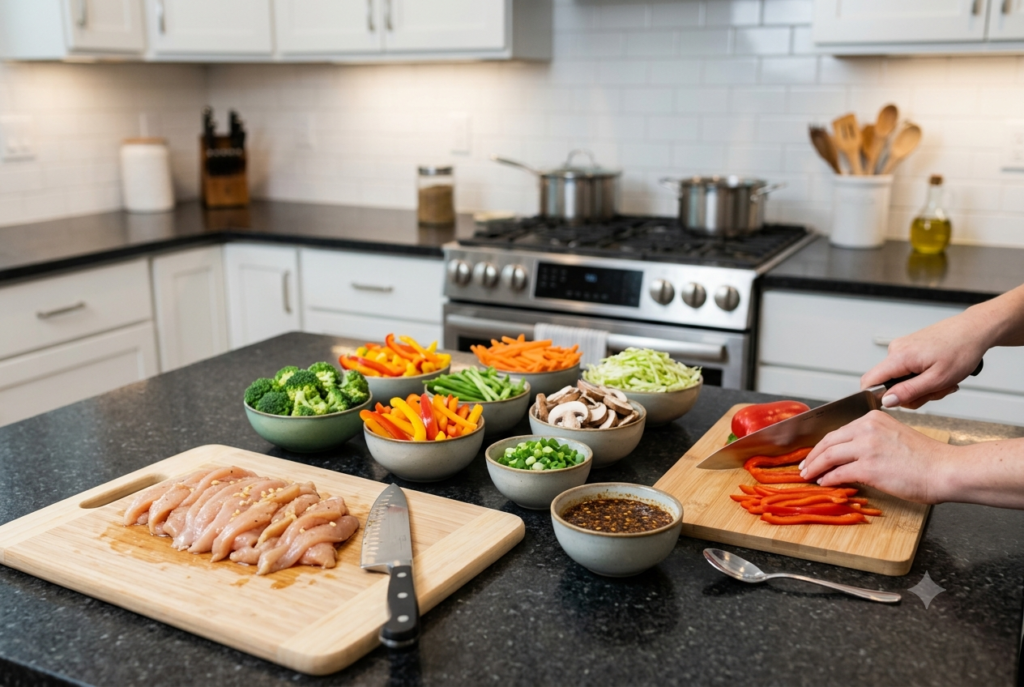
Slice the chicken across the grain into thin, even strips. Cut all the vegetables before turning on the stove because stir-frying moves quickly once the skillet is hot. In a small bowl, whisk the chicken broth, soy sauce, rice vinegar, sesame oil, honey, cornstarch, and red pepper flakes until no white streaks remain.
Heat the Skillet.
Place a large 12-inch skillet or wok over medium-high heat for 1–2 minutes. Add 2 tsp avocado oil and swirl it across the surface. The oil should look fluid and shimmer slightly, but it shouldn’t smoke heavily. A properly heated pan helps the chicken brown instead of releasing liquid and simmering in its juices.
Cook the Chicken
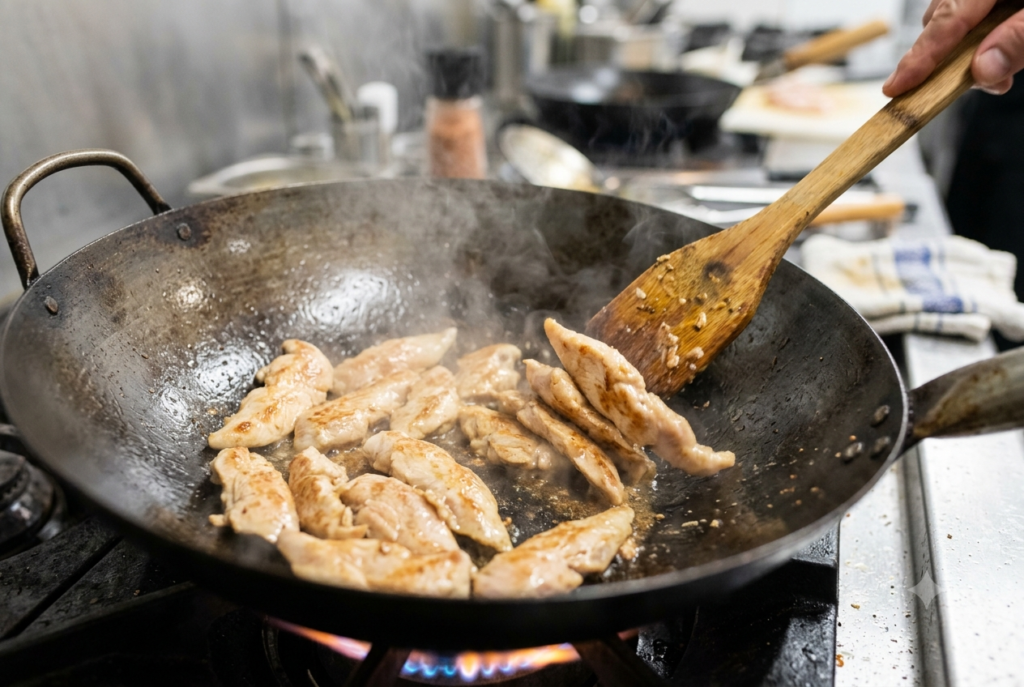
. Add the chicken in one even layer, leaving a little space between the pieces. Cook without stirring for 2 minutes, then toss and continue cooking for 3–4 minutes. The edges should turn golden, and the center should reach 165°F. Transfer the chicken to a clean plate. Pro Tip: Cook it in two batches if your skillet feels crowded.
Start the Firm Vegetables.
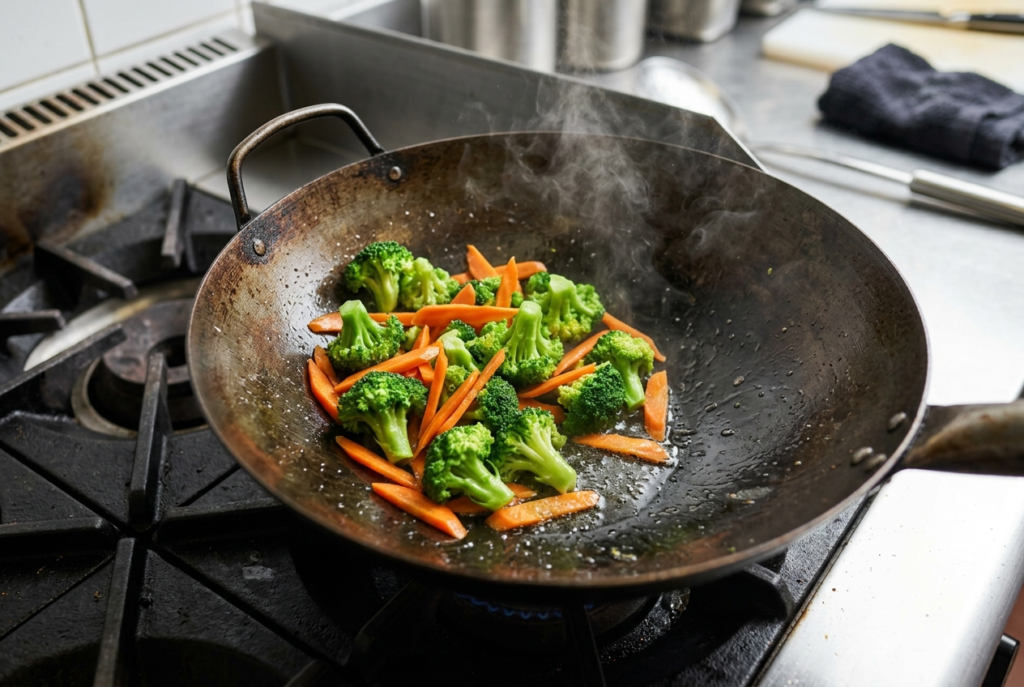
Add the remaining 1 tsp oil to the same skillet. Add the broccoli and carrot, then stir-fry for 2 minutes. Pour in 2 tbsp water and immediately cover the skillet for 1 minute. This brief steam softens the dense vegetables without cooking them until limp. Remove the lid once the broccoli turns bright green.
Add the Remaining Vegetables.
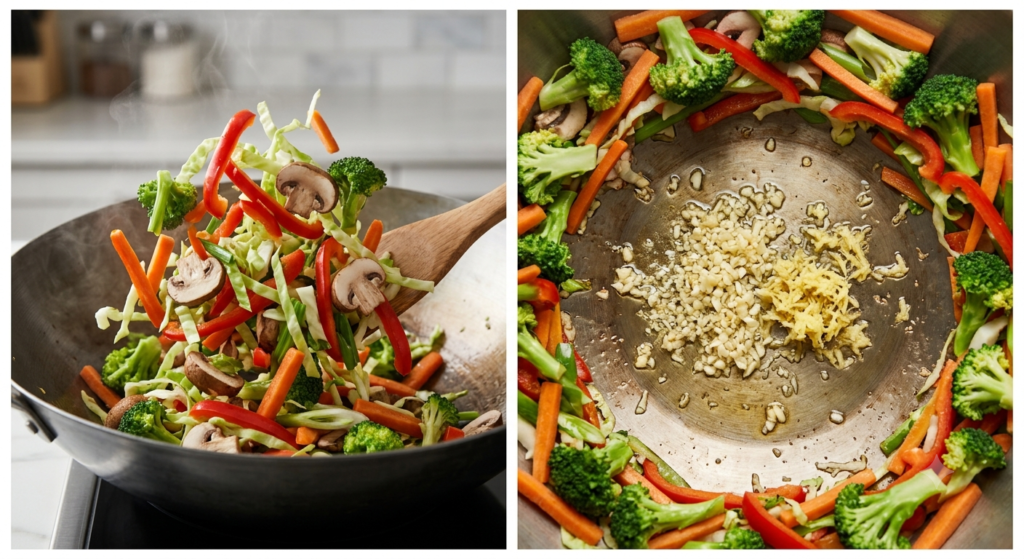
Add the bell pepper, cabbage, mushrooms, and white parts of the green onions. Cook for 3–4 minutes, tossing frequently, until the mushrooms begin to brown and the cabbage softens slightly. Keep the vegetables crisp in the center. Avoid the common mistake of covering the pan again, which traps too much moisture and makes everything soggy.
Add the Aromatics.
Push the vegetables toward the edges of the skillet. Add the garlic and ginger to the open center and cook for about 30 seconds. Stir as soon as they smell fragrant so the garlic doesn’t burn. Pro Tip: Adding aromatics near the end preserves their fresh flavor and prevents bitter, scorched bits.
Finish with the Sauce.
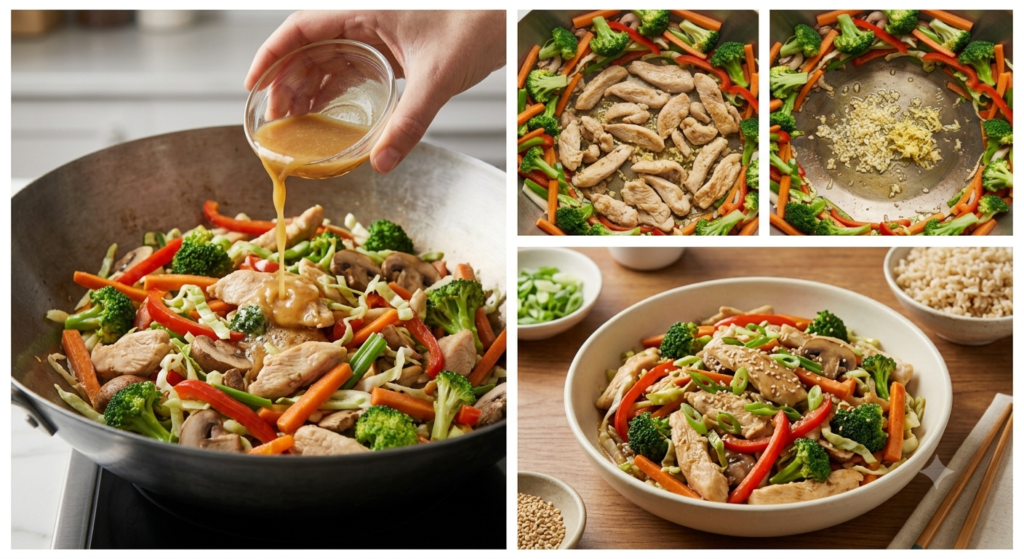
Whisk the sauce again because the cornstarch settles quickly. Return the chicken and any collected juices to the skillet, then pour in the sauce. Toss continuously for 1–2 minutes until the sauce bubbles, turns glossy, and lightly coats every piece. Remove the skillet from the heat before the vegetables lose their crunch.
Taste and Serve.
Sprinkle the green parts of the onions over the stir-fry. Taste before adding extra salt because the soy sauce may already provide enough seasoning. Let the dish stand for 1 minute so the sauce settles around the chicken, then serve it while the vegetables are still hot and crisp.
Expert Tips for Perfect Results
- Slice the chicken across the grain. Shortening the muscle fibers gives each piece a more tender bite, especially when using chicken breast.
- Keep the skillet hot. If the vegetables stop sizzling, let the pan recover for 20–30 seconds before adding more ingredients.
- Don’t overcrowd the pan. A crowded skillet traps steam, leaving the chicken pale and the vegetables watery.
- Dry the vegetables after washing. Surface water lowers the pan temperature and prevents proper browning.
- Cut carrots thinly. Broccoli and carrots take longer to cook, so thin carrot slices help them finish together.
- Remove the pan from the heat promptly. The vegetables continue softening in the hot sauce even after the burner is turned off.
I learned the overcrowding lesson the hard way after turning several promising dinners into chicken-and-vegetable soup. Two quick batches take less time than trying to boil away all that unwanted liquid.
Variations
Gluten-free: Replace the soy sauce with certified gluten-free tamari. Check the chicken broth label as well, since some brands contain gluten-based flavorings.
Vegetarian: Replace the chicken with 14 oz (397 g) pressed extra-firm tofu. Cut it into cubes, sear it until golden, and return it to the skillet with the sauce.
Low-carb: Leave out the honey or replace it with a suitable sugar-free sweetener. Serve the stir-fry over cauliflower rice, shredded cabbage, or zucchini noodles.
Dairy-free: The recipe is naturally dairy-free. Check packaged broth and sauces if you need to avoid all traces of dairy.
Spicy: Increase the red pepper flakes to ½ tsp or add 1–2 tsp chili garlic sauce to the stir-fry sauce. Sliced fresh jalapeño also adds heat without making the sauce noticeably sweeter.
Serving Suggestions
- Serve it over brown rice for a hearty high-fiber meal that absorbs the ginger sesame sauce.
- Spoon it over quinoa for extra texture and a slightly nutty flavor.
- Add toasted sesame seeds, sliced green onions, or chopped cilantro for a fresh finish.
- Pair it with a simple cucumber salad dressed with rice vinegar to balance the warm savory sauce.
- Serve it with unsweetened iced green tea or sparkling water with lime for a light, refreshing pairing.
My family usually asks for rice, but I often eat the leftovers over shredded cabbage at lunch. The cold cabbage stays crisp under the reheated stir-fry and requires no extra cooking.
Storage and Reheating
Store leftover Gut Healthy Chicken Vegetable Stir Fry in an airtight container in the refrigerator for up to four days. Let it cool before covering it, but don’t leave it at room temperature for more than two hours.
For the best texture, reheat individual portions in a lightly oiled skillet over medium heat for 4–5 minutes. Add 1 tbsp water or broth if the sauce has thickened too much.
You can also microwave it for 60 seconds, stir, and continue heating in 20-second intervals until the chicken reaches 165°F. Avoid prolonged reheating because it can dry out the chicken and soften the vegetables.
Freeze the stir-fry for up to two months. The flavor holds up well, although the cabbage, mushrooms, and bell pepper will be softer after thawing. Thaw it overnight in the refrigerator before reheating.
Ingredients
Method
- Slice the chicken and prepare all the vegetables. Whisk the broth, soy sauce, rice vinegar, sesame oil, honey, cornstarch, and red pepper flakes in a bowl.
- Heat 2 tsp avocado oil in a large skillet over medium-high heat.
- Season the chicken with salt and pepper. Cook for 5–6 minutes until browned and the center reaches 165°F. Transfer to a plate.
- Add the remaining 1 tsp oil, broccoli, and carrots. Stir-fry for 2 minutes.
- Add 2 tbsp water, cover, and steam for 1 minute.
- Add the bell pepper, cabbage, mushrooms, and white parts of the green onions. Cook uncovered for 3–4 minutes.
- Add the garlic and ginger and cook for 30 seconds.
- Return the chicken to the skillet. Pour in the sauce and cook for 1–2 minutes until thickened.
- Garnish with the remaining green onions and serve immediately.
Notes
Vegetarian: Replace the chicken with 14 oz (397 g) pressed extra-firm tofu.
Low-carb: Omit the honey or use a sugar-free substitute and serve with cauliflower rice.
Dairy-free: The recipe is naturally dairy-free when made with suitable packaged ingredients.
Spicy: Add ½ tsp red pepper flakes or 1–2 tsp chili garlic sauce.