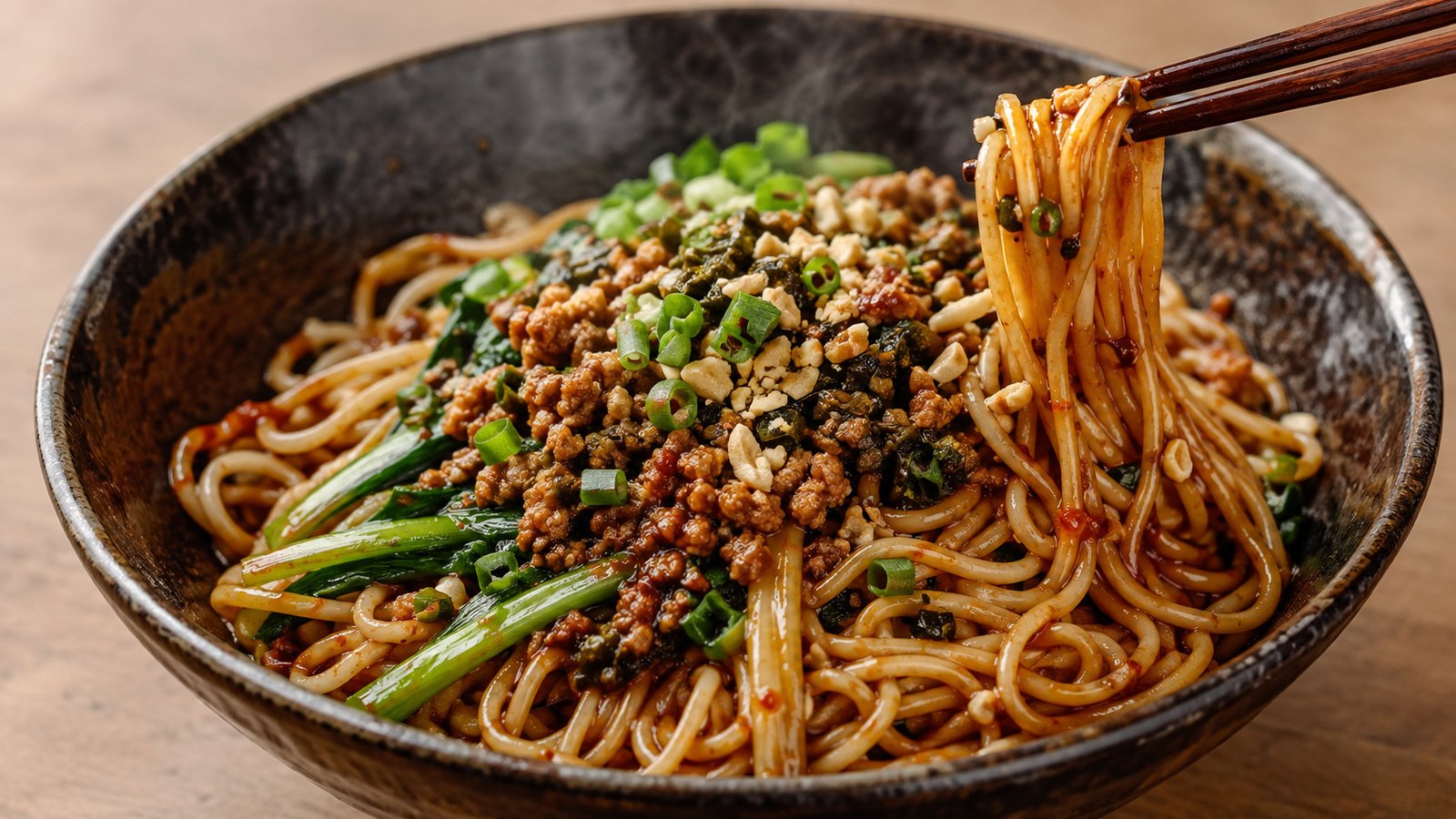
Steam rises as hot wheat noodles meet a glossy, chile-red sauce, finely crumbled pork, and crisp-tender greens. Easy Spicy Sichuan Dan Dan Noodles deliver savory depth, nutty richness, chile heat, and the distinctive tongue-tingling effect of Sichuan pepper in every well-mixed bowl.
Although the ingredient list has several components, the cooking itself takes only 30 minutes. Prepare the sauce and toppings first, then cook the noodles just before serving so they stay springy and heat everything as you toss.
Why You’ll Love This Recipe
- Ready in 30 minutes, including 15 minutes of preparation.
- Makes four satisfying main-course servings.
- Combines springy noodles, finely crumbled pork, crisp greens, and chopped peanuts.
- Delivers spicy chile heat and the numbing tingle associated with Sichuan cooking.
- Most components can wait while you cook the noodles immediately before serving.
Ingredients
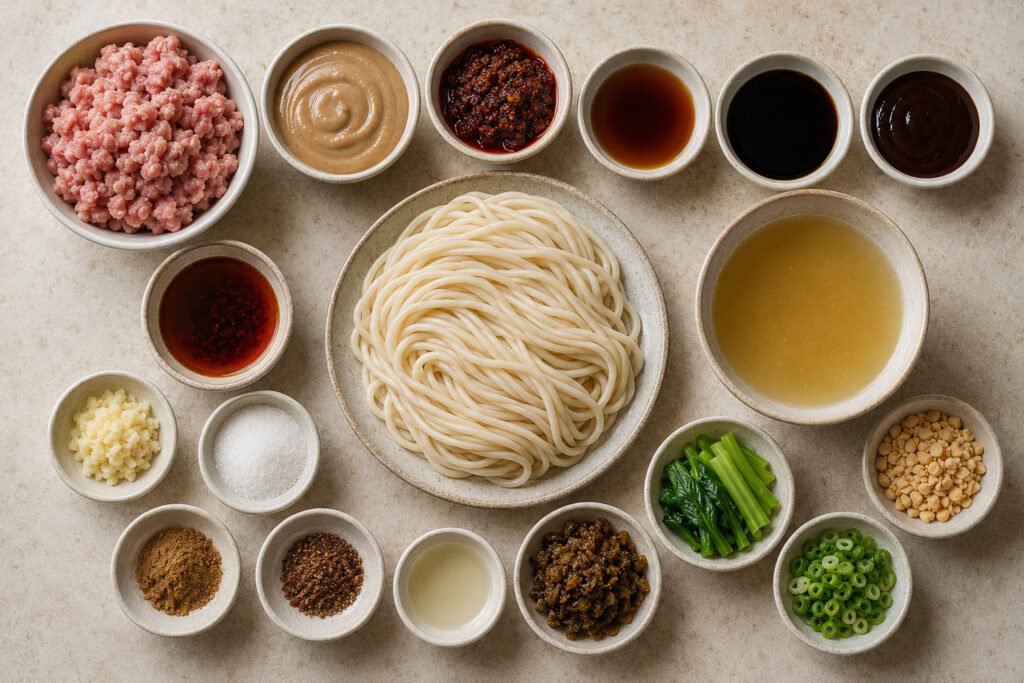
For the Dan Dan Sauce
- 2 Tbsp Chinese sesame paste (32 g)
- 1½ Tbsp Chinese chili paste in oil (about 24 g)
- 4 Tbsp light soy sauce (60 ml)
- 2 garlic cloves, minced
- 3 tsp granulated white sugar (12 g)
- ½ tsp Chinese five-spice powder
- 1 tsp Sichuan pepper powder, preferably freshly ground
- 3 Tbsp Chinese chili oil (45 ml), plus more for serving if desired
- ¾ cup hot low-sodium chicken broth or stock (185 ml)
Chinese sesame paste has a deeper toasted flavor than ordinary tahini. Stir the jar thoroughly before measuring so the settled paste and surface oil are evenly combined.
For the Pork Topping
- 2 tsp hoisin sauce (10 ml)
- 1 tsp dark soy sauce (5 ml)
- 1 Tbsp Shaoxing wine (15 ml)
- ½ tsp Chinese five-spice powder
- 1 Tbsp neutral vegetable oil (15 ml)
- 8 oz ground pork (250 g)
Shaoxing wine seasons the pork without turning the topping into a wet sauce. Have the seasoning mixture ready before heating the wok because the pork cooks quickly over high heat.
For the Preserved Mustard Vegetable
- 1 tsp neutral vegetable oil (5 ml)
- ¼ cup finely chopped sui mi ya cai (30 g)
Sui mi ya cai is a packaged Sichuan preserved mustard vegetable, not fresh mustard greens. Its salty, fermented character is one of the flavors that distinguishes Sichuan dan dan noodles from ordinary spicy sesame noodles.
For the Noodles and Serving
- 1 lb medium-thickness fresh white wheat noodles (500 g)
- 16 choy sum stems, cut into 6-inch (15-cm) lengths
- 2 green onions, thinly sliced
- 1 Tbsp finely chopped peanuts, optional
Use fresh wheat noodles rather than rice noodles for the intended springy texture. Because cooking times vary among refrigerated noodle brands, follow the directions printed on your package.
How to Make This Recipe
Step 1: Mix the Dan Dan Sauce
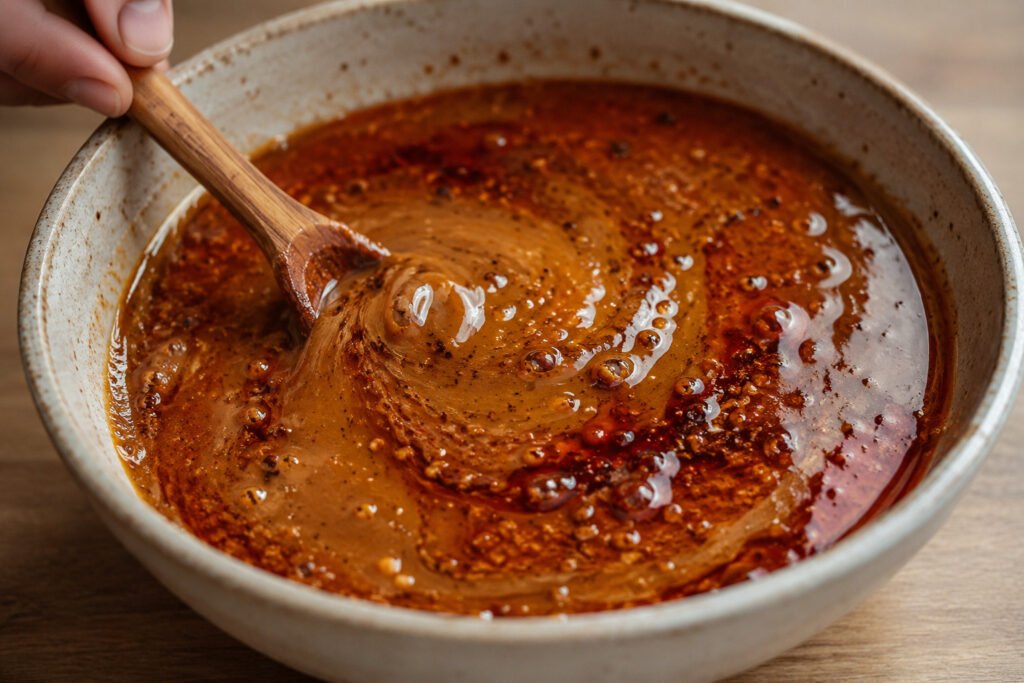
Combine the sesame paste, chili paste, light soy sauce, garlic, sugar, five-spice powder, and Sichuan pepper in a mixing bowl. Stir until evenly blended. Gently mix in the chili oil and hot chicken broth; some red oil should remain visible on the surface rather than disappearing into a completely uniform emulsion.
Pro Tip: Stir Chinese sesame paste from the bottom of the jar before measuring. Otherwise, you may get thin oil from the top and a dense, gritty layer from below.
Step 2: Prepare the Pork Seasoning
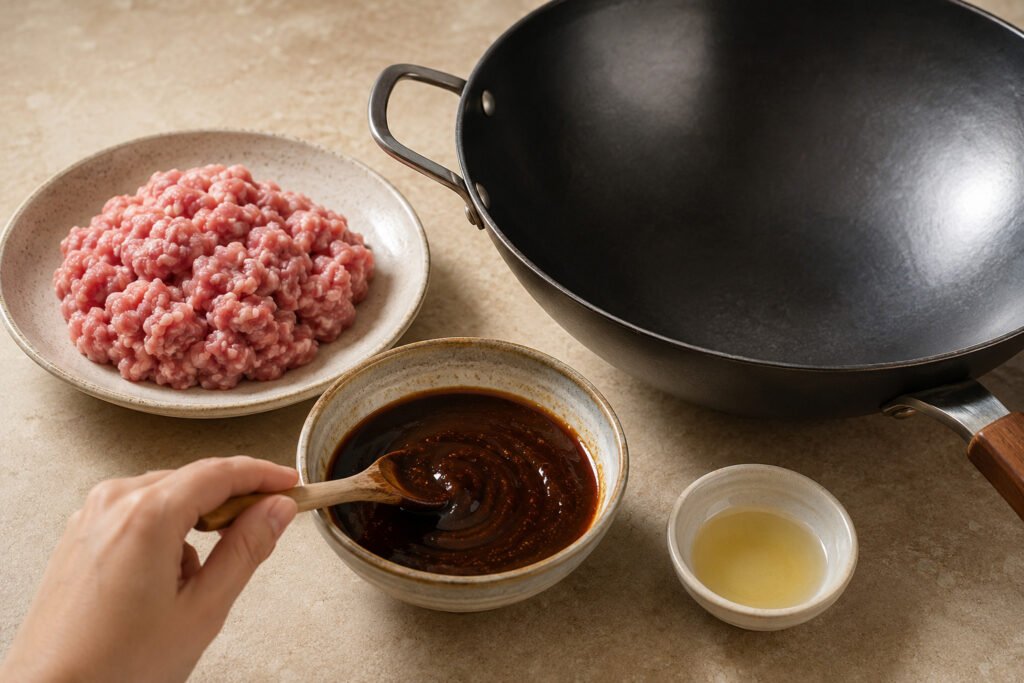
Combine the hoisin sauce, dark soy sauce, Shaoxing wine, and five-spice powder in a small bowl. Set this mixture beside a 12-inch skillet or wok with the pork and vegetable oil. Preparing everything now prevents the pork from overcooking while you search for a bottle or measuring spoon.
Step 3: Cook the Pork
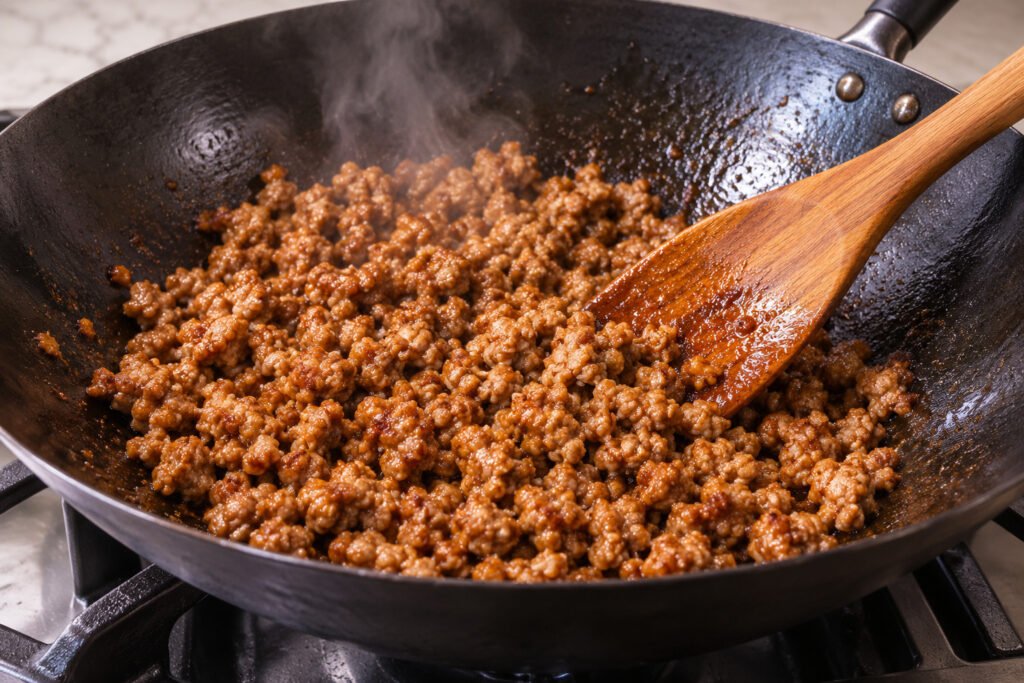
Heat 1 Tbsp vegetable oil in the 12-inch skillet or wok over high heat. Add the pork and break it into small crumbles with a wooden spoon or heatproof spatula. Cook until it changes completely from pink to opaque, then add the prepared seasoning and cook for 1 minute. Transfer the pork to a clean bowl.
For an optional temperature confirmation, ground pork should reach 160°F (71°C). The seasoning should coat the crumbles without leaving a watery pool in the pan.
Step 4: Warm the Sui Mi Ya Cai
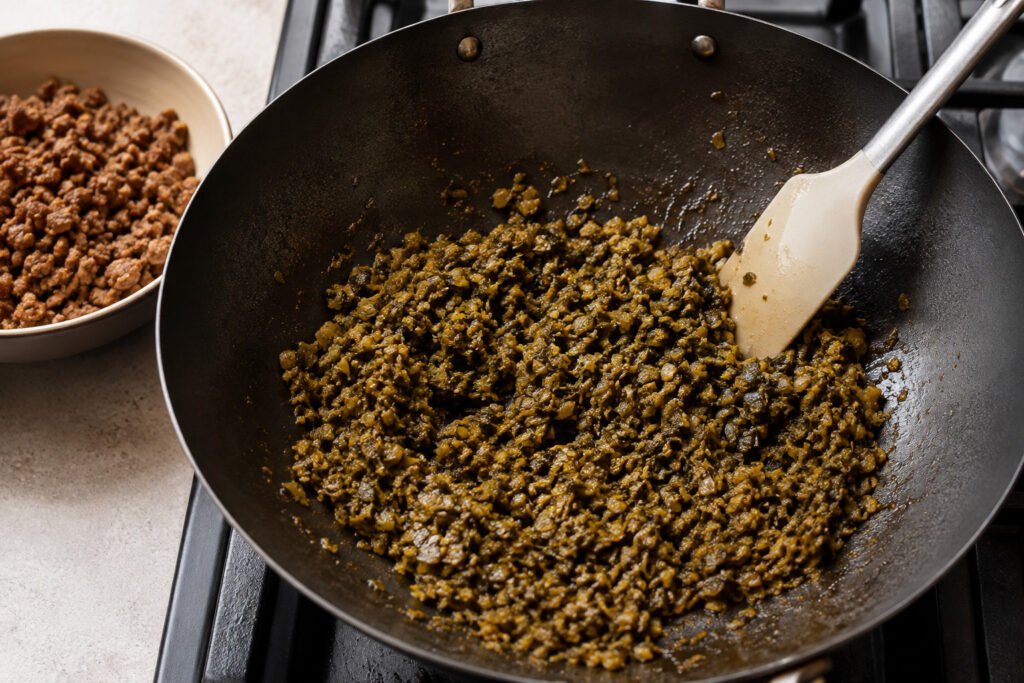
Return the same pan to medium heat and add 1 tsp vegetable oil. Stir in the finely chopped sui mi ya cai and cook for 30 seconds, just until it’s heated through. Transfer it from the pan before it begins to scorch or dry out.
Pro Tip: Keep the pork and preserved vegetable separate after cooking. This makes it easier to distribute both toppings evenly among four bowls.
Step 5: Cook the Noodles and Choy Sum
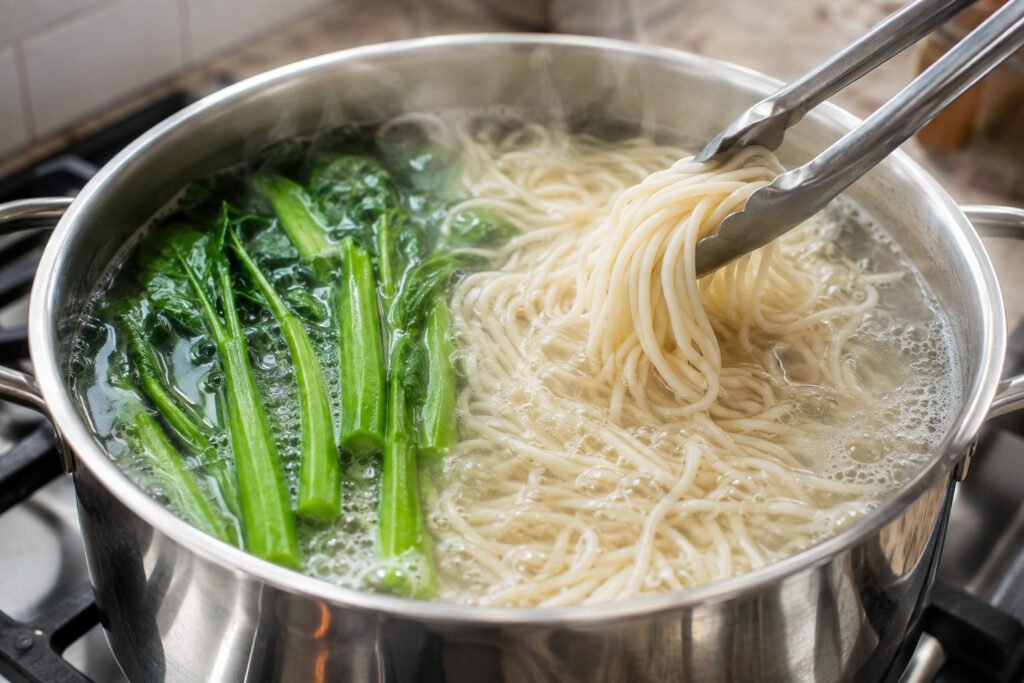
Bring water to a full boil in a 6- to 8-quart pot. Add the fresh wheat noodles and cook according to the package directions. During the final minute, add the choy sum. Drain both in a colander when the noodles are tender with a slight resilient bite and the greens are bright green and crisp-tender.
A common mistake is cooking the noodles too early. As they sit, they stick together and absorb sauce unevenly, so save this step until the bowls and toppings are ready.
Step 6: Assemble and Mix
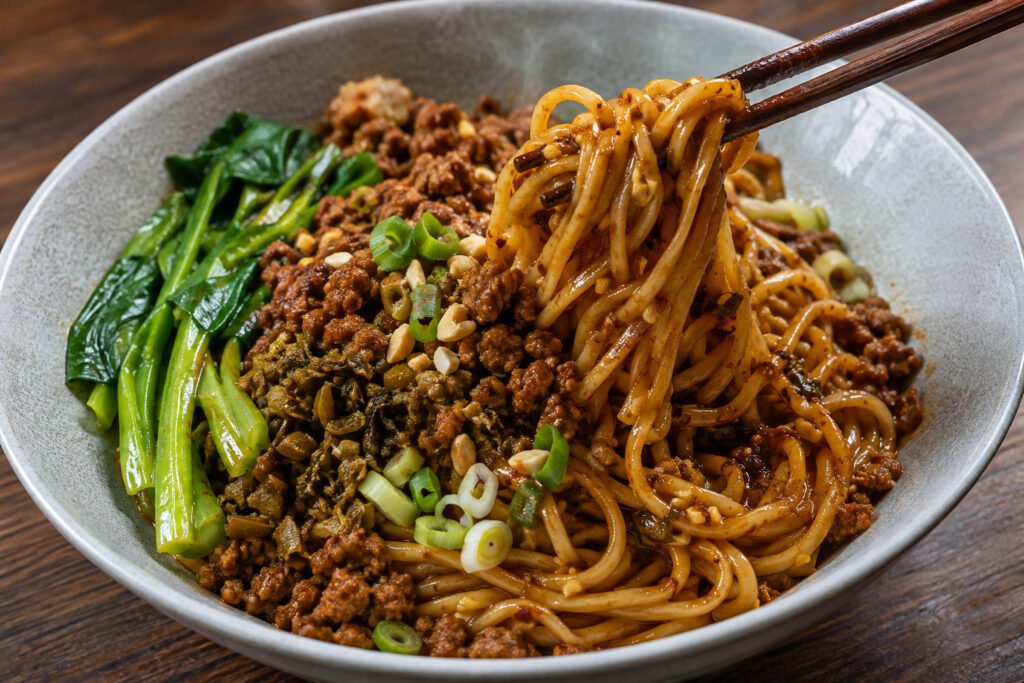
Divide the dan dan sauce among four serving bowls. Add the hot noodles, followed by the pork, sui mi ya cai, and choy sum. Finish with green onions and the optional chopped peanuts. Mix each bowl thoroughly, lifting noodles from the bottom, until every strand has a glossy reddish-brown coating with no lump of sesame paste underneath.
Pro Tip: Serve immediately. The hot noodles warm the prepared sauce and toppings, while prompt mixing keeps the sauce fluid and evenly distributed.
Expert Tips for Better Results
- Use a large pot so the fresh noodles have room to separate instead of clumping as the water returns to a boil.
- Grind Sichuan pepper finely; coarse husks can create an unpleasant gritty texture instead of a clean numbing sensation.
- Measure both light and dark soy sauce carefully. They serve different purposes and aren’t interchangeable in this formula.
- Keep the chili oil quantity at the approved 3 Tbsp, then offer the approved additional chili oil at the table for anyone who wants more heat.
- Use the noodles promptly after draining. Their texture is springiest before they cool and begin absorbing the sauce.
- Mix from the bottom of each bowl, where the sauce sits, rather than stirring only the visible toppings.
Variations
- For an alcohol-free version, replace 1 Tbsp Shaoxing wine with 2 Tbsp additional chicken broth. The pork will have less of Shaoxing wine’s distinctive fermented flavor.
- If Chinese sesame paste is unavailable, use 3 Tbsp tahini mixed with 2 tsp toasted sesame oil. The result will be lighter and less deeply toasted.
- As a last-resort sesame-paste alternative, use 3 Tbsp peanut butter with 2 tsp toasted sesame oil. This creates a sweeter, more recognizably peanut-forward sauce.
- If the preferred Chinese chili paste in oil is unavailable, use an Asian chili paste or sambal oelek and include the approved extra glug of chili oil. Heat and salt levels will vary by brand.
Serving Suggestions
- Serve each portion in a deep, wide bowl so there’s enough room to mix the sauce through the noodles without losing toppings over the rim.
- Pair the noodles with smashed cucumber salad for a cool, crisp contrast to the rich chile-and-sesame sauce.
- Add a simple plate of steamed or stir-fried Chinese greens on the side when you want a more vegetable-forward dinner.
- Offer additional Chinese chili oil at the table so each person can control the final heat without changing the base recipe.
- Serve hot jasmine tea alongside the noodles for a simple drink that won’t compete with their savory, fermented flavors.
Storage and Reheating
Refrigerate leftovers within 2 hours of cooking. Place them in shallow, airtight containers and use them within 3–4 days. Whenever possible, store the noodles separately from the pork, sauce, and vegetables; cooked noodles become stickier and lose some of their bite as they absorb moisture.
For the best reheated result, cook fresh noodles and warm the stored pork and sauce separately. Add a small amount of warm water or broth if the refrigerated sauce has thickened. Reheat the pork and sauce to 165°F (74°C), then assemble the bowls as directed.
If the noodles are already assembled, microwave them in a covered microwave-safe container in short intervals. Stir between intervals for even heating and continue until the food reaches 165°F (74°C). The noodles will be softer than they were when freshly cooked.
For freezing, package the pork topping and sauce separately from the noodles. Freeze the pork for up to 2 months for the best quality, and don’t freeze the fully assembled dish when texture matters. Thaw the frozen components overnight in the refrigerator, reheat to 165°F (74°C), loosen the sauce if necessary, and serve with freshly cooked noodles.
Ingredients
Method
- Mix the sesame paste, chili paste, light soy sauce, garlic, sugar, five-spice powder, and Sichuan pepper in a bowl. Gently stir in the chili oil and hot broth, leaving some oil visible on the surface.
- In a small bowl, combine the hoisin, dark soy sauce, Shaoxing wine, and five-spice powder.
- Heat 1 Tbsp vegetable oil in a 12-inch skillet or wok over high heat. Add the pork and break it into small crumbles. Cook until completely opaque, add the seasoning mixture, and cook for 1 minute. The pork should reach 160°F (71°C) if checked with a thermometer. Transfer to a bowl.
- Return the pan to medium heat. Add 1 tsp vegetable oil and cook the sui mi ya cai for 30 seconds. Set aside.
- Bring water to a full boil in a 6- to 8-quart pot. Cook the noodles according to their package directions, adding the choy sum for the final minute. Drain when the noodles retain a slight bite and the greens are bright and crisp-tender.
- Divide the sauce among four bowls. Add the noodles, pork, sui mi ya cai, and choy sum. Top with green onions and optional peanuts. Mix thoroughly and serve immediately.